Care Without Condition: Nurses Standing Up for Gender-Affirming Care
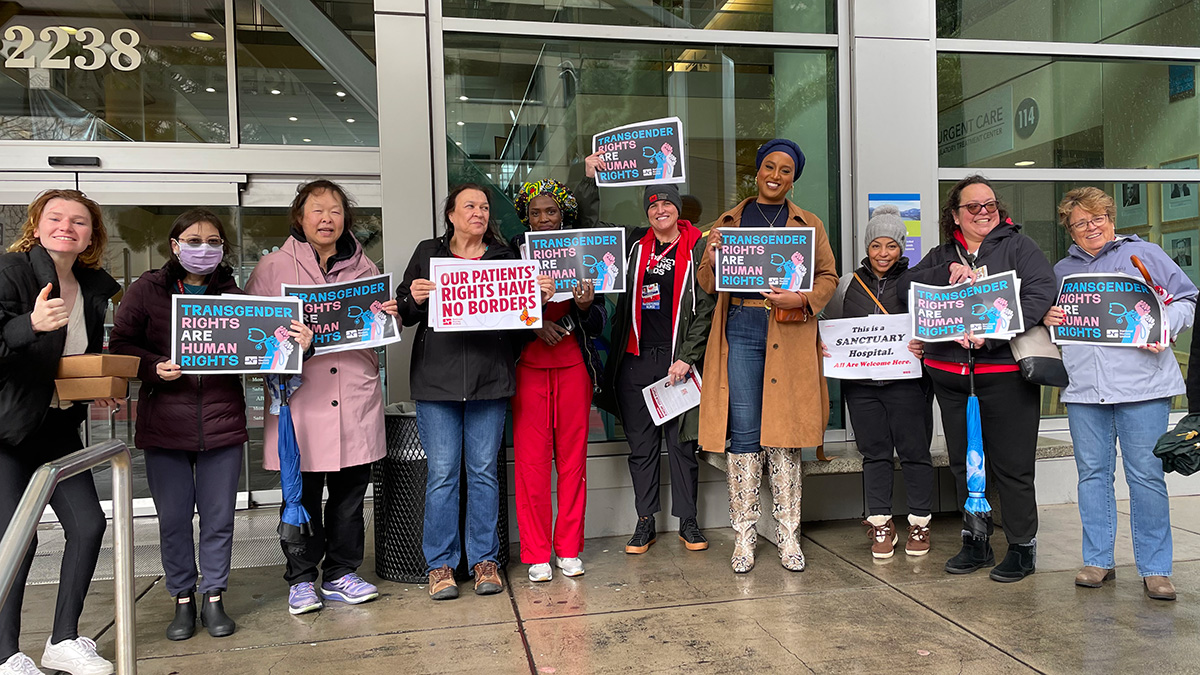
This principle guides nurses every day, in every setting. But for transgender youth and adults, access to care is increasingly under threat. Recent policy shifts in major healthcare systems, including Kaiser Permanente’s decision to pause gender‑affirming surgeries for minors, followed by Stanford Medicine, have sparked nationwide protests—many led by nurses.
At the heart of these protests is a powerful message: nurses are not just caregivers; they are defenders of dignity and justice.
When Policy Pressures the Bedside
In August 2025, Kaiser Permanente announced a pause on gender-affirming surgeries for patients under 19, citing increasing scrutiny from the U.S. Department of Justice. Stanford Medicine followed shortly after. Both institutions cited legal pressure and shifting federal policies. However, nurses responded swiftly and vocally.
“Nurses, parents of trans youth, and trans patients themselves do not support this,” said Sydney Simpson, a nurse who led the protest at
Kaiser’s San Francisco campus. “We won’t be silent.”
These policy changes, though framed as temporary, leave young patients in limbo. Many of them have already undergone extensive mental health assessments and preparation. For them, care delays are not neutral. They are harmful.
The Ethics of Affirmation
Gender-affirming care — including puberty blockers, hormone therapy, and surgery — is supported by major medical organizations such as the American Academy of Pediatrics, the American Medical Association, and the World Professional Association for Transgender Health.
Nurses working with transgender patients understand the deeply personal and life-saving nature of this care. They see, firsthand, the emotional relief, improved mental health, and restored self-worth that can come from being affirmed in one’s identity.
But what happens when institutional policies clash with professional ethics?
For many nurses, the answer is clear. You advocate. You inform. You stand up.
Voices from the Frontlines
At Kaiser and Stanford, nurses were not alone. They were joined by families, LGBTQ+ advocates, fellow providers, and lawmakers, including Senator Scott Wiener, who said, “We’re going to fight, and we’re going to win.”
Protesters emphasized that gender-affirming surgeries for minors are rare and only used in well-vetted, exceptional cases, often as part of long-term care plans. Yet the new restrictions create fear and confusion, making already marginalized youth feel even more isolated.
Anna G., a nurse and protester, summarized the stakes clearly:
"We’re supporting the providers who know that giving kids the care they need saves lives."
What Nurses Can Do
Even in difficult political climates, nurses have tools and a voice.
- Educate Yourself and Others: Stay informed on gender-affirming care guidelines, and share evidence-based information with colleagues and patients.
- Advocate Inside Your Institution: Join diversity and inclusion councils, speak up in ethics committees, and push for patient-centered policies.
- Support Affected Patients: Whether or not you work directly in trans care, you can be a source of respect, clarity, and emotional safety for transgender patients.
- Join or Support Local Movements: Many nursing unions, professional bodies, and LGBTQ+ organizations welcome healthcare allies.
Care Is Not Conditional
The nurse’s code of ethics does not change with politics. At its core, nursing is about protecting the vulnerable, respecting patient autonomy, and providing evidence-based, compassionate care.
Transgender patients — especially youth — are watching how their communities, caregivers, and institutions respond in this moment.
And nurses are showing the world a clear truth: care is not conditional. Not based on politics. Not based on pressure. Not based on fear.
It is a commitment. One that nurses are willing to uphold, every day.