Introduction
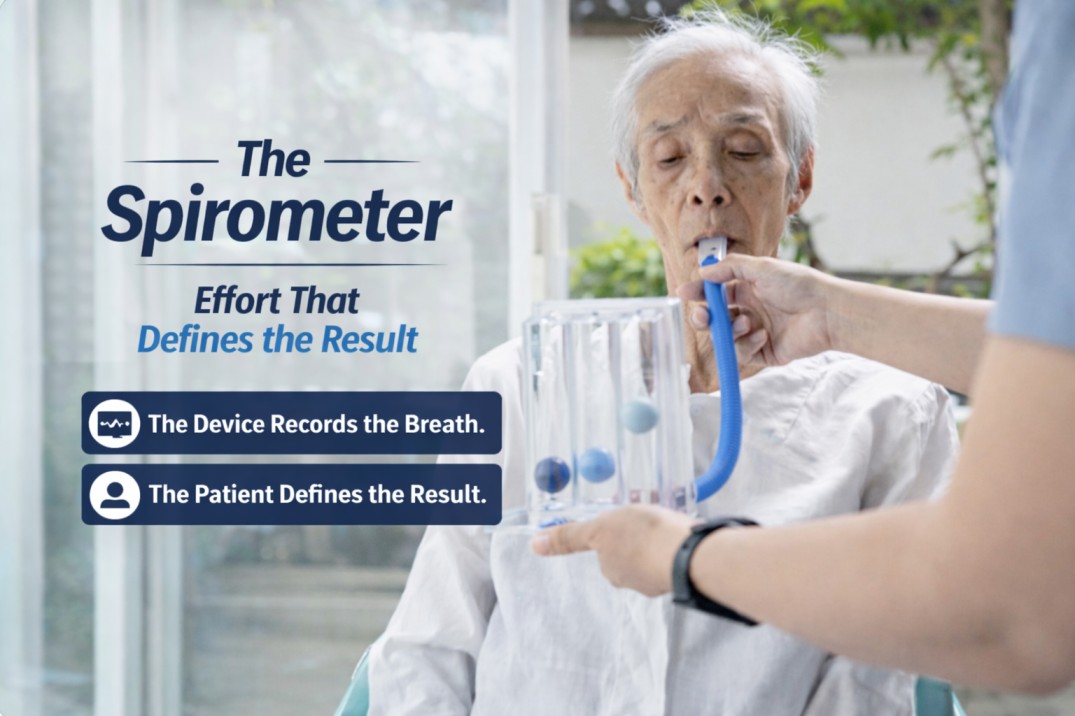
Breathing is natural. It feels automatic. However, when it is measured, it becomes intentional. A patient is asked to inhale deeply and exhale forcefully into a device. The result is a set of numbers. These values appear precise and objective. Yet they depend on something less controlled. They depend on effort.
Origin and Development
In 1846, John Hutchinson invented the first spirometer. It was used to measure vital capacity. This marked the beginning of lung function testing. His findings showed a link between lung function and health. It was one of the first ways to measure breath in numbers.
Early spirometers were large mechanical devices. They used a water-sealed system to measure air volume. Over time, technology improved. The devices became smaller and more portable. Today, digital spirometers provide detailed values for airflow and volume.
The Device
A spirometer is a measurement tool used to assess breathing ability and lung performance. It evaluates the volume and flow of air during exhalation. The device consists of a mouthpiece, a sensor, and a recording system. It measures values such as forced vital capacity and forced expiratory volume using airflow and volume data. Spirometers are designed for high accuracy. However, they do not create the effort required to perform the test.
The Role It Plays
Spirometry is important in diagnosing and classifying respiratory conditions such as asthma and chronic lung disease. It helps assess severity and monitor response to treatment. The device provides measurable data that supports clinical decisions. However, the data produced depends on the effort the patient puts into the test.
What Makes It Critical
Lung function is defined by spirometry values. Small changes in these values can affect diagnosis and treatment. Reduced values may suggest disease, while values within the expected range may not. Accurate measurement is essential for proper interpretation. Spirometry also depends on patient performance.
Where Errors Begin Quietly
Small errors are common in spirometry testing. A poor seal around the mouthpiece can cause air leakage. Incomplete inhalation can reduce lung volume. Coughing during the test can alter results. Weak or short exhalation can affect flow measurements. The spirometer will still produce results, but they may not reflect true lung function.
The Illusion of Objectivity
Spirometry provides numerical values and graphical curves. This creates a sense of certainty. However, results vary with technique and patient cooperation. Differences in effort can change successive tests. The numbers may appear fixed, but the measurement process is variable.
Why It Matters
Spirometric deviations can affect key clinical decisions. These include patient assessment, diagnosis, treatment planning, and follow-up. Inaccurate results may lead to misclassification. This can result in unnecessary treatment or missed diagnosis of lung disease.
Improving the quality of spirometry through proper technique enhances test accuracy. This improves interpretation without changing the patient’s actual condition.
Closing Thought
A spirometer is a precision instrument for diagnosing lung capacity/volume. The device and measurement techniques provide the patient with an accurate measurement of how much air they inhale. However, the effort behind the test is unknown. A spirometer captures the patient's breath through the device itself, but it is the patient that determines the final outcome of the test.