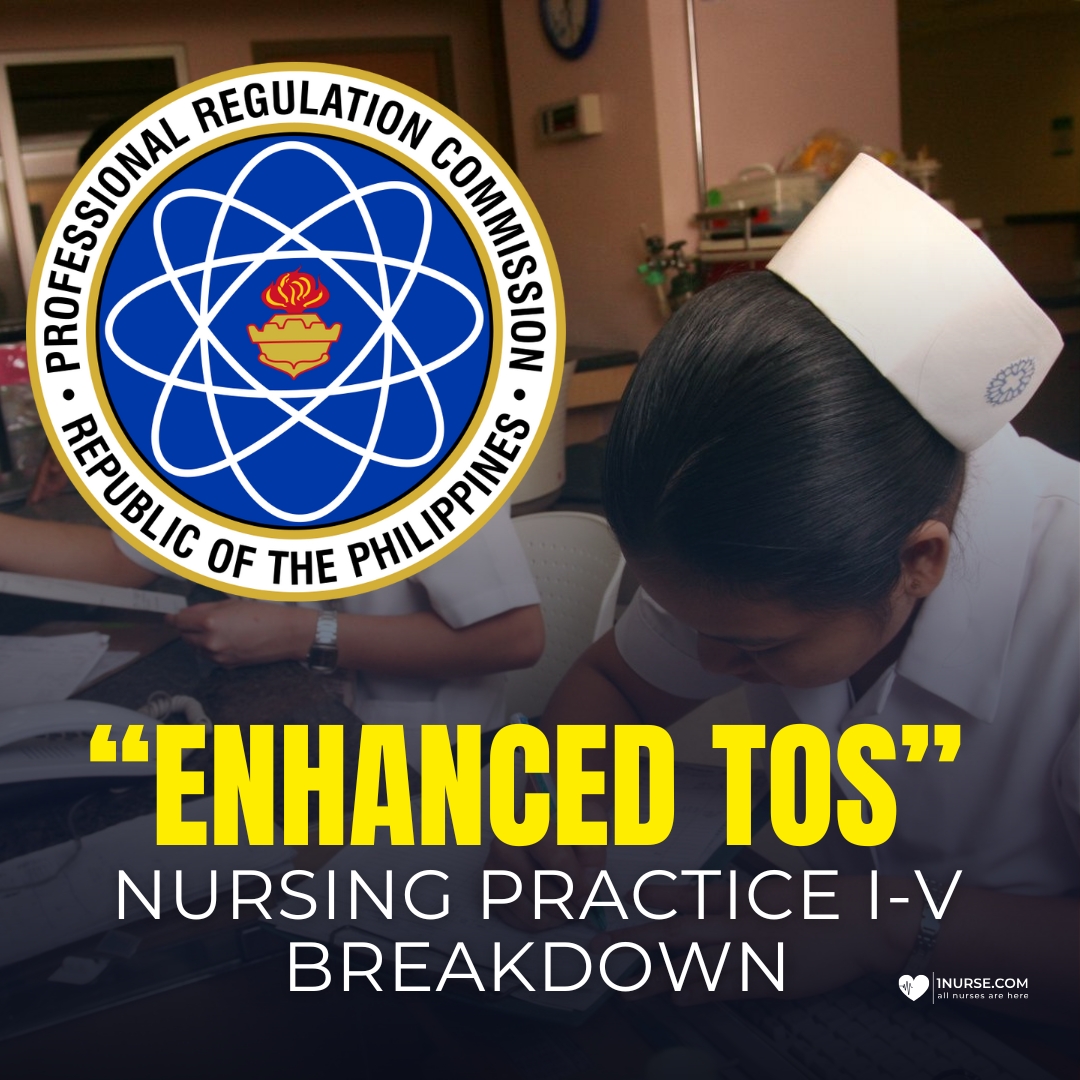
If you are preparing for the Nurses Licensure Exam (NLE), there is big news you need to know. The Professional Regulation Commission (PRC) Board of Nursing has released a new Competency-Based Test Framework and Table of Specifications (TOS) that will take effect starting the November 2025 exam.
So, what does this mean for nursing students and repeat takers? Let’s break it down.
Why this update matters
The new framework is no longer focused only on memorization. It emphasizes competency-based learning, which means:
You will be tested on how you apply knowledge, not just recall facts
Real-life scenarios will be used to measure decision-making and critical thinking
Nursing will be assessed not only on clinical skills but also on communication, ethics, research, teamwork, and leadership
In short, the exam now reflects the real responsibilities of a nurse.
The structure of the exam
The exam is divided into five parts (Nursing Practice I–V). Each part contains:
20 situational scenarios
5 questions per scenario
100 questions per subject
This means the test is designed to measure how well you can respond to situations similar to actual nursing practice.
Competency domains you need to know
Across all five parts of the NLE, the following competencies are covered:
Patient care competencies (65%) with safe quality care making up 50%
Communication (5%)
Collaboration and teamwork (5%)
Health education (5%)
Empowering competencies (15%) including ethics, legal accountability, and professional growth
Enabling competencies (10%) including resource and records management
Enhancing competencies (10%) including research and quality improvement
The takeaway is clear: most of your preparation should focus on patient care scenarios, but do not overlook areas like ethics, teamwork, and research.
Focus areas for each subject
Here is a quick summary of the unique focus in each Nursing Practice area:
Nursing Practice I (Community Health Nursing) covers admission and discharge care, vital signs, medications, hygiene, comfort, mobility, and end-of-life care
Nursing Practice II (Maternal and Child Nursing) covers family care, newborn and child health, maternal complications, and family planning
Nursing Practice III (Physiologic and Psychosocial Alterations – Part A) covers pain management, peri-operative care, oxygenation, metabolic and nutritional concerns
Nursing Practice IV (Physiologic and Psychosocial Alterations – Part B) covers fluid and electrolyte balance, immunologic response, acute crises, and disaster response
Nursing Practice V (Psychosocial Nursing) covers neurologic and sensory dysfunction, degenerative disorders, maladaptive behavior, mental health, and substance abuse
How to use this for your review
The new framework is a guide to help you prepare smarter. Here are some tips:
Focus on patient care, since it makes up 65 percent of the exam
Practice answering scenario-based questions and learn to analyze situations before choosing the best response
Strengthen non-clinical skills like communication, ethics, and teamwork
Study with Bloom’s Taxonomy in mind, as higher-level thinking such as application and evaluation will be tested
How 1NURSE can help you
At 1NURSE, the goal is to help you review with the updated framework in mind. The platform provides:
Scenario-based drills that mirror the new exam style
Guided study plans to help you focus on the right competencies
Insights from past topnotchers
Mock exams structured around the 20-scenario format
With 1NURSE, you are preparing not only to pass the exam but also to perform like a real nurse in practice.
Final word
The new competency-based TOS for the NLE is a step forward. It ensures that future nurses are not only equipped with knowledge but also with the skills, judgment, and adaptability required in real healthcare settings.
Start aligning your review with this framework now, and with 1NURSE by your side, you will walk into the exam with greater confidence.