A Space Designed to Protect
The smallest patients in a hospital often require the greatest level of care. Premature or critically ill newborns cannot maintain body temperature or respond to changes in their surroundings the way healthy infants can. Their bodies are still trying to adapt to life outside the womb.
For many of them, survival depends on more than treatment alone.
It also depends on the environment.
This is why the incubator becomes such an important part of their care.
How the Idea Began
French physician Stéphane Tarnier was inspired after seeing warming chambers used to heat chicken eggs at a zoo in Paris. He believed the same principle could help premature babies who struggled to survive outside the womb.
At the time, many premature infants died because they could not maintain body temperature on their own. Tarnier developed an early infant incubator to provide controlled warmth and improve survival.
The incubator gave these infants time.
Time to grow strong enough to regulate their own body heat and survive outside the device.
What an Incubator Does
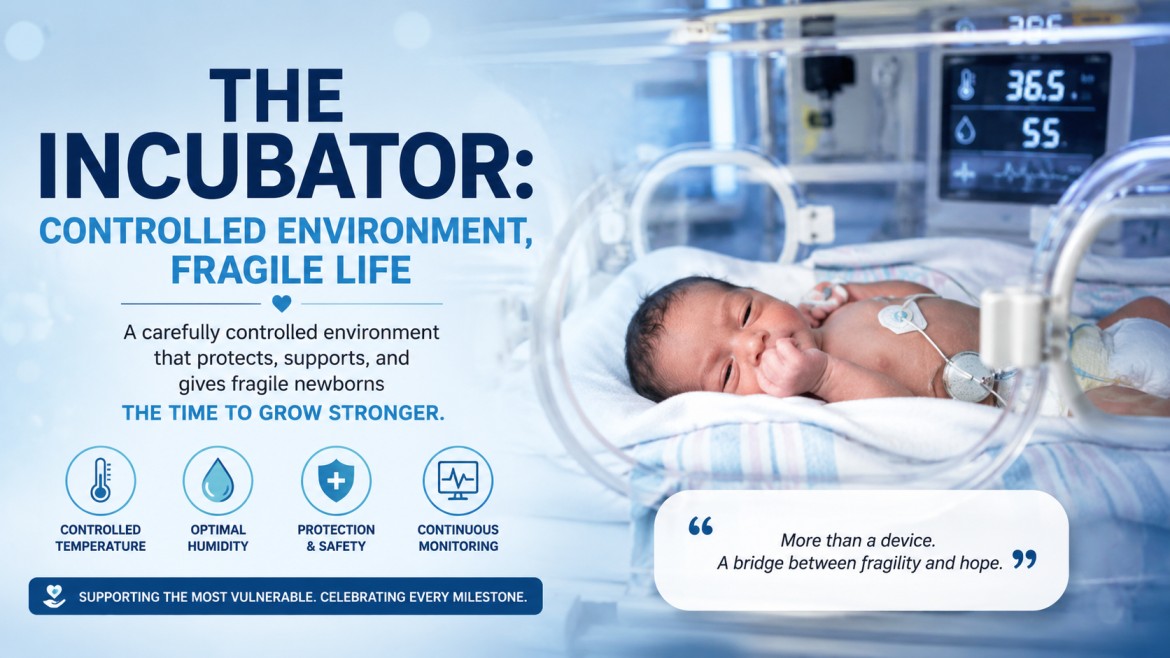
An incubator for premature and critically ill babies is designed to provide a controlled, supportive, and safe environment while the infant receives continuous care from healthcare professionals.
It protects the baby from external stress while allowing constant observation and treatment. Some modern systems also include built-in monitoring functions that track temperature and physiological status.
An incubator is more than a container.
It is an extension of supportive care.
Why Environment Matters
A newborn infant’s body functions are delicate, especially in premature infants. Even small changes in temperature can significantly affect metabolic rate and oxygen consumption. Excessive heat loss or overheating can both lead to instability.
Humidity control is also important. Premature skin loses water rapidly, increasing the risk of dehydration. Controlled airflow and protection from outside exposure help maintain physiological balance.
The incubator is not a treatment for disease.
It is a supportive tool that creates the conditions necessary for survival and recovery.
Where Precision Becomes Important
Accurate settings and constant monitoring are essential for incubator performance. Even small changes in temperature or humidity can affect the stability of a newborn infant.
Frequent opening of the incubator may disturb the internal environment, while errors in sensor placement can interfere with temperature regulation. Delayed recognition of instability may also affect patient care.
The system may appear controlled.
But maintaining that control requires continuous attention.
Technology and Monitoring
Modern incubators include built-in alarm systems, and many units can sense the baby’s skin temperature and automatically adjust the incubator’s temperature in response. These systems help maintain a more stable environment for the infant.
However, they also create reliance on proper sensor calibration, accurate temperature recording, and correct usage.
The incubator can provide support,
but clinicians must still interpret and respond to the data it provides.
The Emotional Side of the Device
The incubator becomes a barrier between the family and their baby. Parents can see through its transparent walls, yet touch is often limited. It protects the infant, but it can also create an emotional distance between the baby and family.
At the same time, the incubator represents hope.
With the right support, a fragile infant can continue to grow stronger.
Why It Matters
Neonatal care depends heavily on environmental stability. Incubators have significantly improved survival outcomes for premature and critically ill newborns.
They support growth, reduce physiological stress, and allow continuous monitoring during the most vulnerable stage of life.
Their role is quiet, but critical.
Closing Thought
The incubator was designed to recreate the stability of the womb—something medicine alone cannot provide. It carefully controls temperature, humidity, and other environmental conditions needed to support a fragile newborn.
Behind every setting is an infant still adjusting to the outside world.
The incubator does more than provide warmth.
It gives the body time to continue developing.