When Breathing Becomes Difficult
Most people do not think about breathing until something goes wrong. In hospitals, especially in the ICU, ER, or during surgery, some patients are unable to clear mucus, saliva, blood, or other fluids from their airway. Even partial blockage can quickly become dangerous.
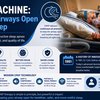
Because of this, the suction machine has become an essential piece of equipment. While less visible than many other hospital devices, it plays a critical role in helping patients breathe safely.
How the Idea Began
The requirement for airway clearance has been around since the advent of medicine. Manual suctioning and hand pumps generating negative pressure to clear fluids were among the first methods used.
Soon after surgery advanced in the late 19th and early 20th centuries, a reliable means of suctioning was needed. Gradually, electrically operated suction machines replaced manually operated pumps allowing quicker and better control of fluid removal from patients during surgery or in the emergency room.
Innovations in suction technology, portability, and infection control improved suction technology enough to make suction devices an integral component of modern healthcare.
Suction Machines are ubiquitous in hospitals, ambulances, clinics, and homes today.
What a Suction Machine Does
A suction machine is a medical device designed to remove unwanted fluids or secretions from the airway or surgical area using negative pressure.
Most systems contain:
- A vacuum pump that generates suction
- Tubing that carries fluids
- A collection canister
- A suction catheter or tip
A suction machine is a device that provides suction to clear the airway of mucus, saliva, blood, vomit or other secretions that could block your breathing or make it difficult for healthcare providers to carry out medical procedures.
By ensuring the airway is clear, suction machines promote the delivery of oxygen while also reducing the risk of respiratory complications.
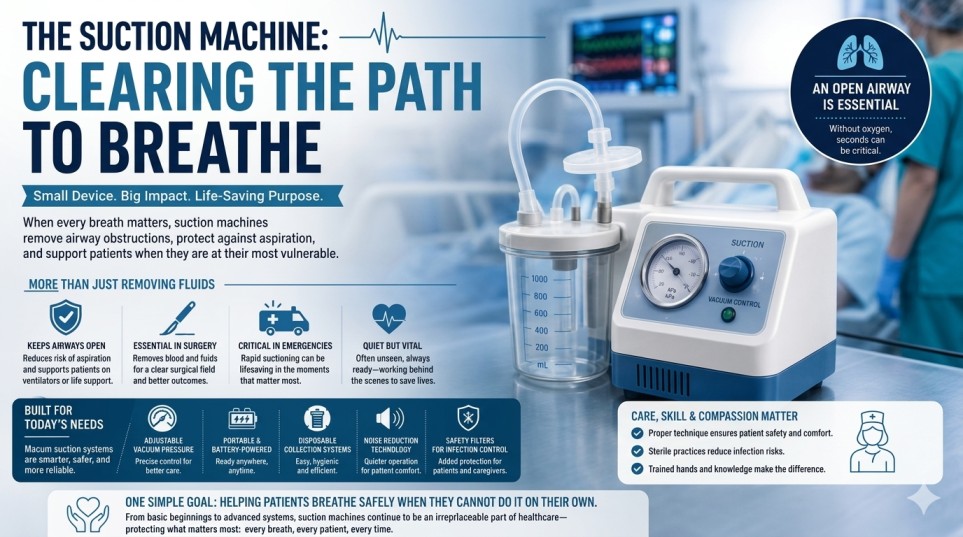
More Than Removing Fluids
A suction machine does more than remove secretions. In critical care settings, suctioning helps keep the airway open, reduces the risk of aspiration, and supports patients connected to ventilators or artificial airways.
During surgery, suction devices remove blood and fluids from the surgical field to help maintain a clear view for surgeons. In emergency care, rapid suctioning can become lifesaving within seconds after injury.
The equipment often works quietly in the background,
but its importance remains constant.
How Modern Systems Have Evolved
Modern suction machines are more compact, portable, and precise than earlier systems. Many devices now include adjustable vacuum pressure, battery-powered operation, disposable collection systems, noise reduction technology, and safety filters to reduce contamination.
Their portability makes them especially important in ambulances and emergency transport, where immediate airway management may be required. In many advanced hospitals, suction systems are also connected directly to centralized medical gas and vacuum networks.
Where Challenges Remain
Suctioning is performed routinely in healthcare settings, but it must still be done carefully. Excessive suction pressure or poor technique can irritate airway tissues and cause patient discomfort.
Maintaining sterile technique is also essential to reduce the risk of infection. Many patients, especially those who are critically ill long term, may experience discomfort or anxiety during frequent suctioning.
The effectiveness of suctioning depends not only on the device itself,
but also on the knowledge and skill of the healthcare provider performing it.
Why It Matters
An open airway is essential for survival. When a person cannot breathe properly, oxygen levels can fall very quickly. Suction machines help remove airway obstructions so air can move freely.
In many situations, they support patients during their most vulnerable moments, including after surgery, during respiratory distress, trauma, or while on life support.
The function of a suction machine may seem simple in theory,
but its importance in real life is critical.
The Human Side of Airway Care
Many healthcare devices are large, complex, or highly visible, such as MRI machines, CT scanners, or infusion pumps.
The suction machine is different. It often goes unnoticed unless needed during an emergency or critical patient situation.
When clinicians must quickly restore a patient’s ability to breathe, suctioning is often one of the first interventions used.
Closing Thought
Although suction machines are not widely recognized in healthcare, they play an essential role. They remove fluids that block the airway and help protect one of the body’s most important functions: breathing.
The technology has evolved from basic manual suction devices to today’s reliable and advanced systems used throughout healthcare settings. Behind this mechanical process is one simple but critical goal: helping patients continue to breathe safely when they cannot do so on their own.