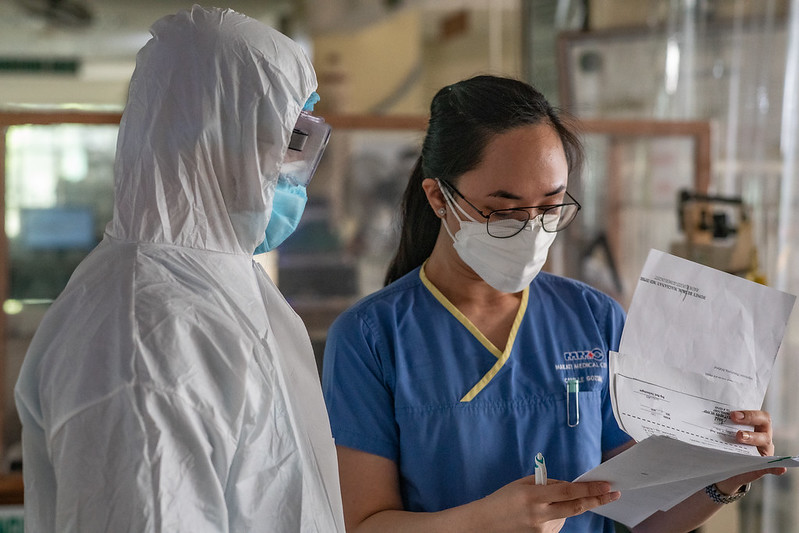
The next pandemic is inevitable, and Filipino nurses will once again be on the front lines. Their role during COVID-19 was vital and continues to be. While some lessons have led to improvements, many longstanding issues remain.
This article explores what must still be addressed to ensure Filipino nurses are protected, equipped, and heard before the next crisis hits.
Training: Progress and Gaps in Preparedness
During early COVID-19, many nurses learned on the job due to limited formal training in pandemic response. Infection control is part of the nursing curriculum, but many, especially in rural areas, still lack updated training for emerging diseases. Encouragingly, some institutions have begun to offer continuing education and pandemic preparedness workshops. However, access remains uneven due to financial and logistical barriers. Experts continue to call for regular emergency drills and accessible modules for all healthcare workers.
PPE Access: Improving but Still Inconsistent
During the pandemic, nurses often worked with limited personal protective equipment (PPE), sometimes reusing masks or going without complete gear. Since then, the government has made efforts to build stockpiles and improve distribution. Still, access remains inconsistent, especially in remote areas. A nationwide, real-time inventory system could help ensure all health workers have what they need before an emergency.
Infrastructure: Signs of Investment but Strain Remains
The healthcare system continues to face funding gaps and capacity challenges. In many public hospitals, a single nurse may be responsible for 20 to 50 patients, far beyond the Department of Health’s recommended 1 to 12 ratio. Some field hospitals built during COVID-19 have been dismantled, but others have been repurposed or upgraded. With over 2,000 ICU beds nationwide, expansion continues to be a critical need. Progress is happening, but more sustained investment is essential.
Public Health Readiness: Building Toward Better Coordination
The Department of Health has pandemic response plans, but implementation relies on local governments. This has created uneven levels of readiness. Digital tools like StaySafe.ph, SafePass, and ValTrace have improved disease tracking, though they still need better integration.
Importantly, nurses are increasingly being recognized for their role in community surveillance. Involving them more directly in planning and policy could greatly strengthen early detection and response efforts.
A Workforce at a Crossroads
A 2024 survey of over 10,000 Filipino health workers found that nearly 48% plan to quit or migrate, with burnout as the leading cause. Still, many remain committed to serving despite the challenges. The continued migration of Filipino nurses to countries like the United States, Canada, and the United Kingdom is driven by better pay and safer conditions. Unless domestic reforms catch up, the country risks losing more of its trained professionals. But there is still time to turn the tide with meaningful investment, policy changes, and support.
Conclusion: From Lessons to Action
Filipino nurses played a critical role during the pandemic, remaining on duty despite limited resources and high risks. But recognition alone is not enough. Preparing for the next pandemic requires addressing ongoing challenges: better training, reliable access to protective equipment, improved working conditions, and including nurses in planning and decisionmaking.
Preparedness is not just about having a plan, it is about ensuring that the healthcare system is strong enough to protect its workforce every day, not just in crisis.
The future can be better, and Filipino nurses deserve to see that change take root now.