The pacing of change in Health Care continues to escalate. As demands placed onto clinicians grow, it has become necessary for providers to use technology - not just for documenting patient care, but also as a means to support clinical reasoning.
The use of technology to support clinical reasoning can aid and reduce the time between decision-making and delivery of interventions to patients. Some key technologies that every nurse should understand in 2026 include:
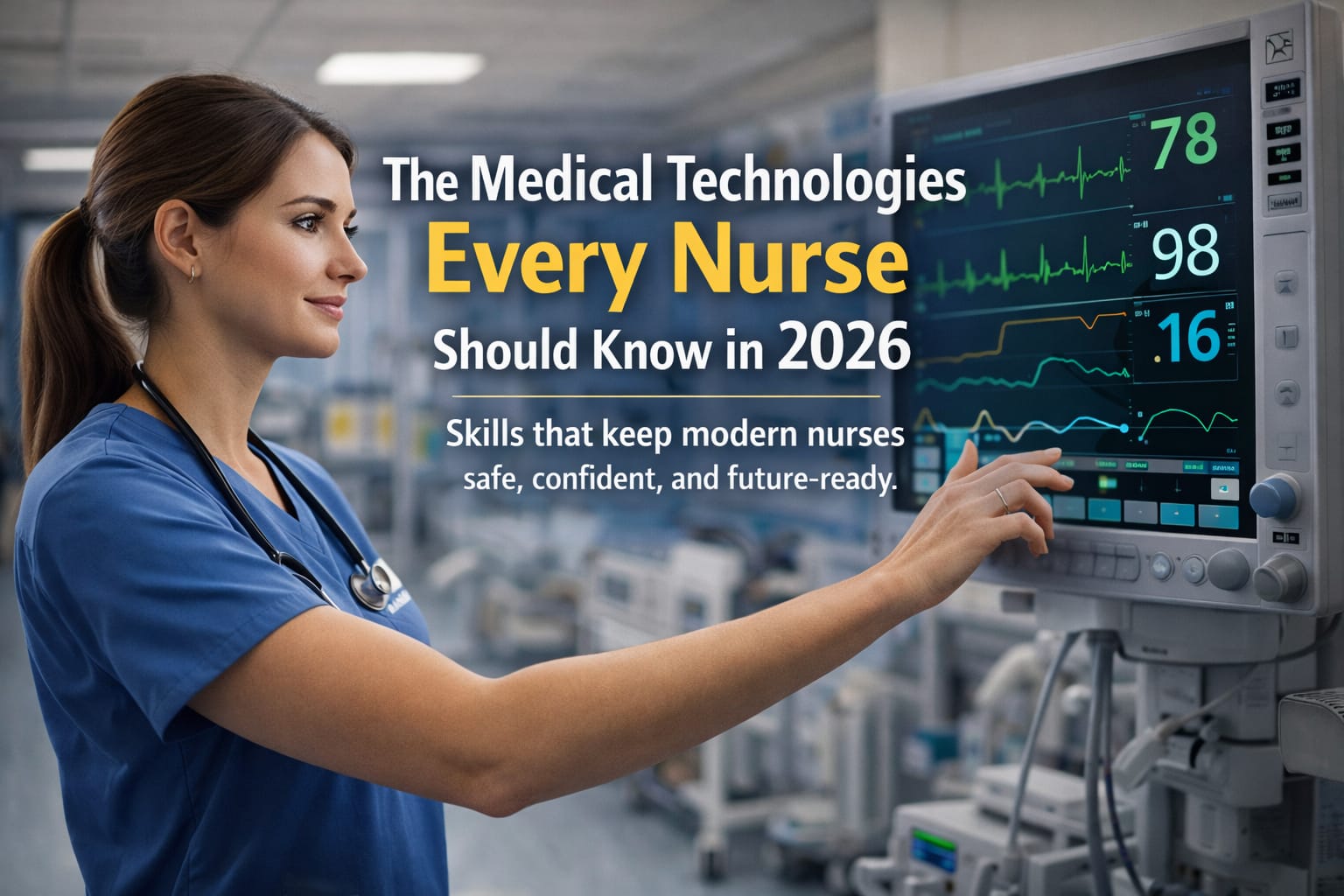
1. Advanced Vital Signs Monitoring Systems
Continuous monitoring is now common beyond ICUs. Modern monitors track key vitals in real time.
Nurses should know:
- Correct sensor and cuff placement
- Spotting false alarms vs real decline
- Watching trends, not single readings
- Basic troubleshooting
Early recognition of small changes remains a core nursing strength.
2. Smart Infusion and Syringe Pumps
Medication delivery is more automated and precise, with built-in safety features.
Core skills:
- Programming accurate infusion rates
- Using drug libraries
- Responding to pump alarms
- Checking line safety
Strong pump skills directly support patient safety.
3. Electronic Health Records (EHR)
Paper charts are fading. Real-time digital charting is now standard.
Be comfortable with:
- Bedside charting
- Medication records
- Clinical notes
- Order checks
- Handoff tools
Good documentation reduces errors and saves time.
4. Barcode Medication Administration
Barcode systems add an extra safety check for the right patient and drug.
Key skills:
- Proper scanning technique
- Managing scan failures safely
- Avoiding unsafe overrides
- Maintaining safe workflow
Used correctly, these systems reduce medication errors.
5. Smart Beds and Fall-Prevention Technology
Modern beds help monitor patient movement and safety.
Nurses should know how to:
- Adjust bed alerts
- Interpret movement warnings
- Use positioning features
- Include bed data in assessment
Especially useful for high-risk and older patients.
6. Remote Patient Monitoring and Wearables
Care is extending into the home through connected devices.
Important skills:
- Review transmitted data
- Spot abnormal trends
- Teach proper device use
- Escalate concerns
Remote monitoring is becoming part of routine care.
7. Telehealth and Virtual Care
Video visits and remote triage are now common.
Nurses should be ready to:
- Perform structured virtual assessments
- Communicate clearly on video
- Document visits accurately
- Recognize remote care limits
Virtual communication is now a core skill.
8. AI-Supported Decision Tools
AI is beginning to assist with alerts and risk prediction.
Remember:
- AI supports, not replaces, decisions
- Alerts need clinical judgment
- Over-reliance is risky
- Human thinking remains central
9. Hospital Service Robots and Automation
Some hospitals now use robots for delivery and logistics.
Practical awareness:
- Coordinate workflow
- Ensure safe handoffs
- Understand system limits
- Reassure patients
These tools reduce workload, not bedside care.
Final Thoughts
Technology is advancing rapidly in healthcare, but human care remains just as important. Patients still need careful assessment, sound judgment, and human presence.
The nurses who will stand out in 2026 will not be the ones who know the most gadgets, but those who combine strong clinical thinking with confidence in modern tools.
Learning these technologies is not about keeping up with machines. It is about ensuring that nurses remain central to safe, compassionate, and effective patient care.