The syringe may be small, but its impact on healthcare is enormous.
It is so familiar that we rarely pause to think about it. It rests in our hands during the most routine moments of care and the most critical ones. It eases pain, delivers life-saving drugs, and protects entire communities through vaccination. It does not announce itself. It simply does its work.
But this small, transparent cylinder carries a history that quietly shaped modern nursing.
A Doctor’s Simple Question
In the mid-nineteenth century, pain was often something medicine accepted rather than treated. Doctors could prescribe drugs, but delivering them accurately into the body was difficult and unreliable. Two physicians, Alexander Wood in Scotland and Charles Pravaz in France, were deeply troubled by this limitation.
Their question was simple and deeply clinical: What if medicine could be delivered directly where it is needed, in a measured, controlled way?
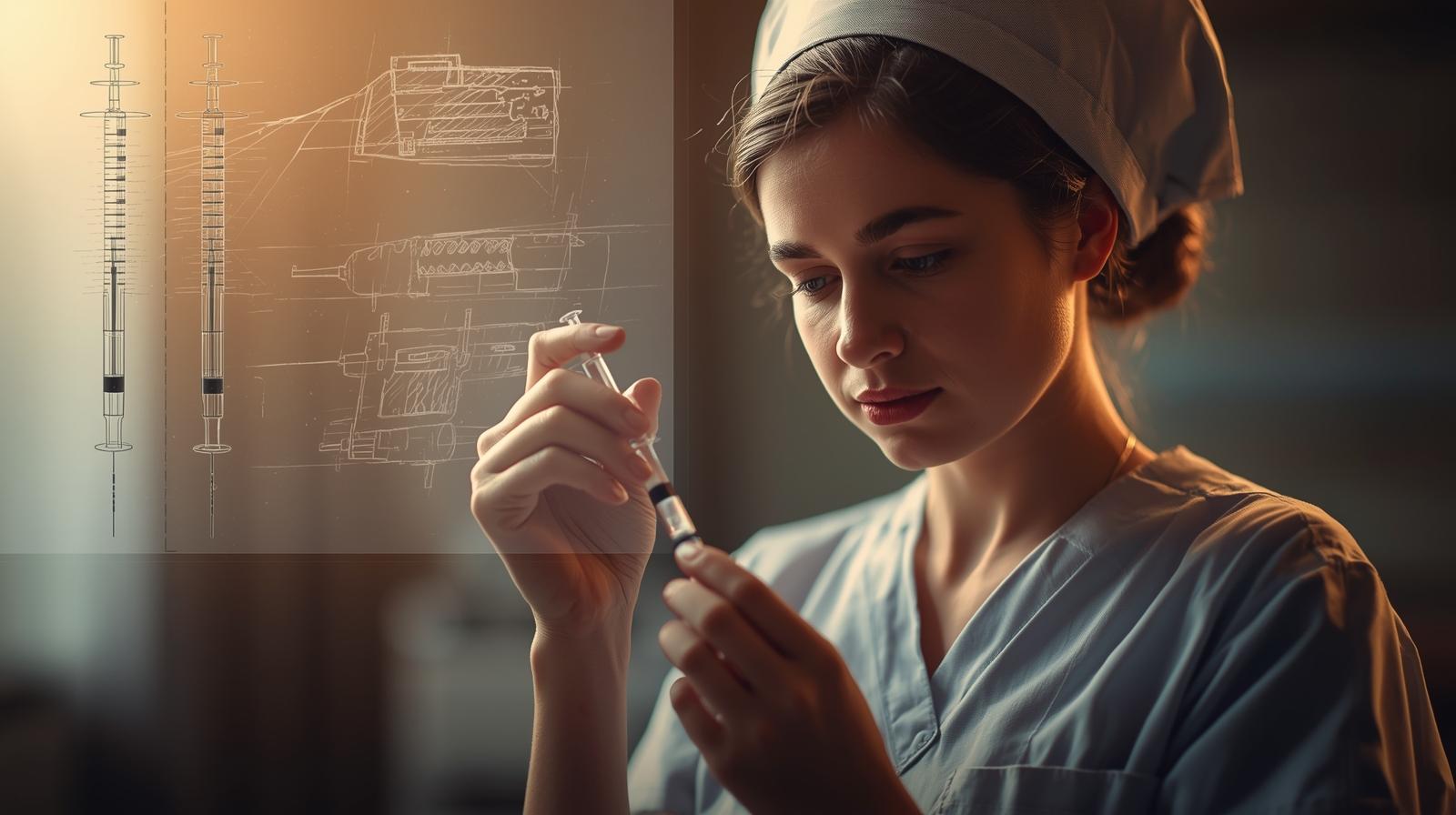
From this question came the hypodermic syringe, a hollow needle connected to a calibrated barrel. There was no intention to revolutionize healthcare. There was only an attempt to reduce suffering.
That intention changed everything.
From Doctor’s Tool to Nursing Essential
What began as a physician’s invention soon found its true home in nursing practice.
The syringe did more than improve drug delivery. It changed the role of nurses. Precision became possible. Timing became critical. Skill mattered. Treatment no longer depended only on what drug was prescribed, but on how carefully it was prepared, administered, and monitored.
Modern nursing grew alongside this tool.
Every injection requires judgment: the correct dose, the right site, the proper technique, the patient’s comfort, and constant vigilance for reactions. Over time, nurses became the primary guardians of safe injection practices—developing standards, protocols, and training that protect millions of patients every day.
Quiet Moments of Trust
A syringe also represents trust.
When a patient rolls up their sleeve or looks away before an injection, they are placing their body and their fear in the nurse’s hands. For many patients, the syringe is not just a medical device; it is a moment of vulnerability. Nurses learned to soften that moment with calm words, steady hands, and reassurance.
This human side of the syringe is rarely written about, yet it is deeply real.
The Foundation of Modern Care
Today, modern nursing would be unimaginable without this invention.
- Vaccination programs depend on it
- Emergency care relies on it
- Diabetes management, anesthesia, IV therapy, pain control—all begin with a syringe
Even the most advanced technologies, such as smart pumps, auto-injectors and prefilled systems, are built on the same simple principle introduced by these two doctors more than a century ago.
What has changed is not the idea, but the scale of responsibility carried by nurses who use it.
An Innovation That Lives in Practice
Medical innovation does not always arrive as complex machines or artificial intelligence. Sometimes, it arrives as a simple object that fits in the palm of a hand and quietly reshapes an entire profession.
Alexander Wood and Charles Pravaz gave medicine a tool. Nurses turned it into a practice, a discipline, and an act of care.
In that sense, every syringe used today is more than equipment. It is a living collaboration between invention and compassion, between medicine and nursing, repeated millions of times each day in moments that matter most.