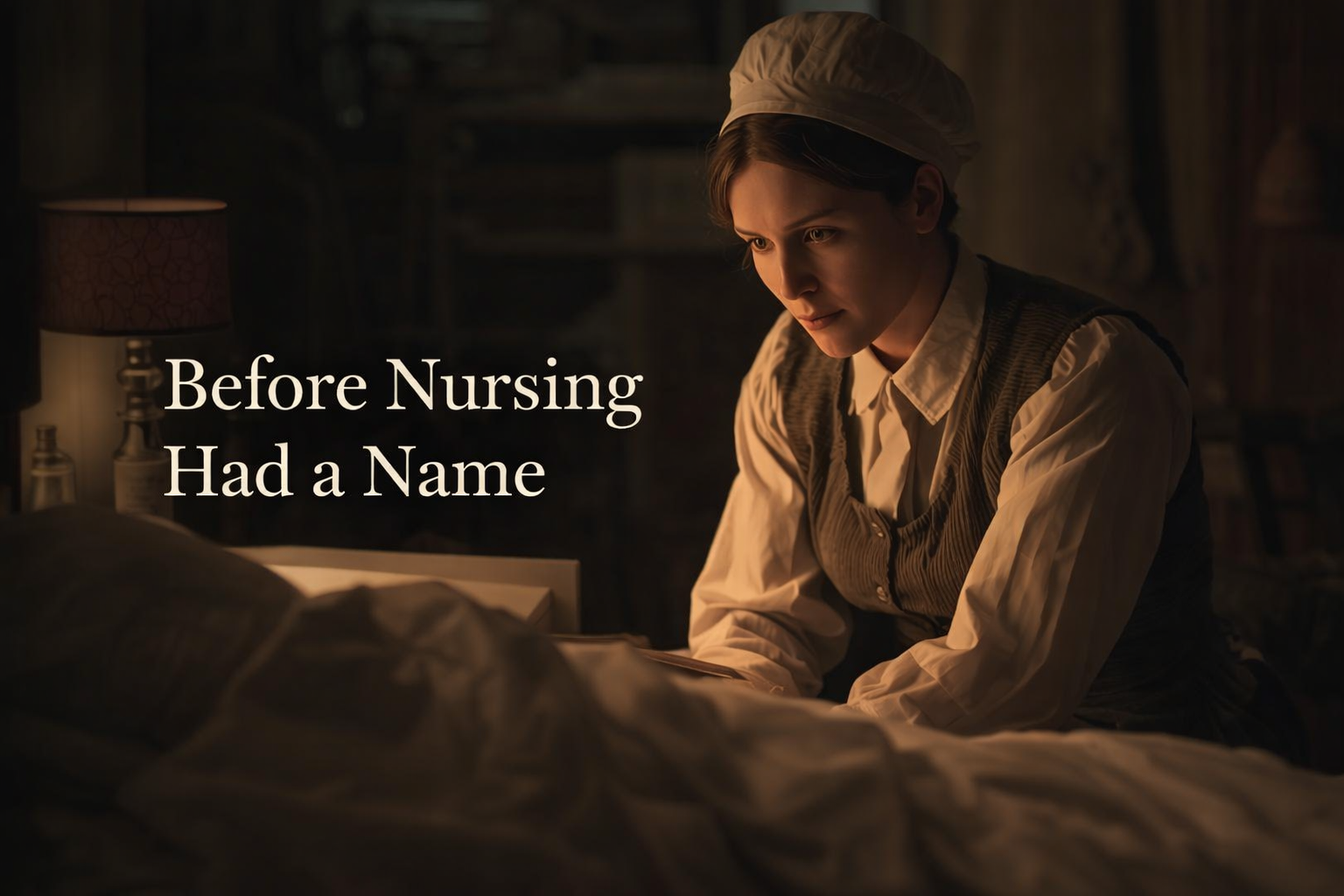
Before nursing had uniforms, degrees, or job titles, it had something far more important: care.
Someone stayed beside the sick through the long night.
Someone cleaned wounds, offered water, and noticed the small changes that meant everything.
Nursing did not begin in hospitals.
It began wherever a human being needed help.
Care Before Nursing Had a Name
In ancient times, illness was often explained through religion or superstition. Healing happened mostly at home, led by women and caregivers who relied on observation, experience, and compassion. In civilizations like India, Egypt, Greece, and China, early writings already described what made a good caregiver: cleanliness, patience, skill, and kindness.
Long before nursing was taught, its values were practiced.
When Care Became a Moral Duty
As religion shaped societies, caring for the sick became an act of service. Monasteries and convents opened their doors to the poor and ill. Monks and nuns provided food, shelter, and comfort during plagues and epidemics—often at great personal risk.
These caregivers laid the foundation for organized nursing, even though their work was rarely recognized.
A Time When Nursing Lost Respect
Not all chapters are inspiring. When many religious institutions closed, nursing lost structure. Care was left to untrained workers in overcrowded, unsafe hospitals. The role was undervalued, underpaid, and misunderstood.
Yet nursing never disappeared. Even in its hardest moments, care continued.
Florence Nightingale Changed Everything
The turning point came in the 19th century with Florence Nightingale.
During the Crimean War, she showed that cleanliness, fresh air, nutrition, and careful observation could save lives. Death rates dropped dramatically—not because of new medicines, but because of better care.
More importantly, she proved that nursing required knowledge and training. In 1860, she opened the first formal nursing school, changing nursing from “helping” into a profession.
Nursing Grows With the World
Wars, epidemics, and medical advances shaped modern nursing. Nurses worked in battlefields, emergency wards, communities, and homes. Education expanded. Specializations emerged. Nurses became essential decision-makers in healthcare.
Today, nurses are clinicians, educators, researchers, and leaders. They manage technology, interpret data, support families, and advocate for patients—often all in the same shift.
What Has Never Changed
Despite everything that has changed, one thing hasn’t.
Nursing is still about:
- Presence when someone is afraid
- Attention to details others overlook
- Speaking for those who cannot
From ancient homes to modern ICUs, nursing has always meant responsibility, trust, and care.
Why This History Matters
Knowing the history of nursing reminds us that this profession was built on courage, service, and quiet strength. It shows why nurses matter to people at their most vulnerable moments.
Every time a nurse listens, reassures, or stays a little longer, they carry forward a legacy of care that continues every day because of them.