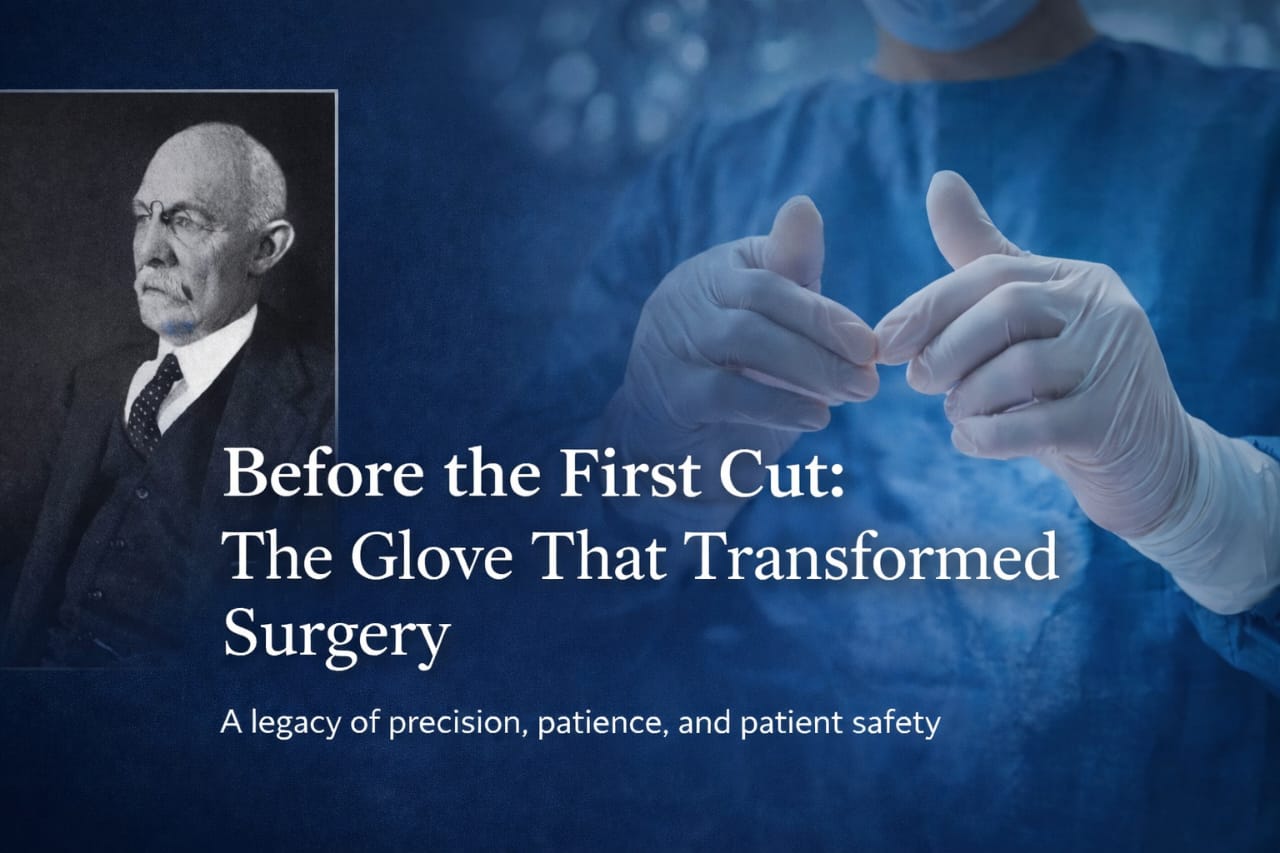
Modern surgery changed not because of a complex machine, but because of a simple idea, covering the surgeon’s hands. The introduction of surgical gloves reshaped infection control and made safer surgery possible.
This pivotal shift is associated with Dr. William Stewart Halsted, a leading figure in the development of modern surgical practice.
Surgery Before Surgical Gloves
In the late 19th century, surgeons commonly operated with bare hands. While antiseptic practices were beginning to gain acceptance, postoperative infections remained a leading cause of surgical complications and mortality.
Skin irritation from harsh antiseptic chemicals was also common, particularly among operating room staff.
The Problem Observed in the Operating Room
Dr. Halsted, working at Johns Hopkins Hospital, observed that prolonged exposure to antiseptic solutions was causing severe dermatitis in operating room personnel. This not only affected staff well-being but also disrupted surgical efficiency.
He recognized the need for a practical solution that would protect staff while maintaining surgical sterility.
The Introduction of a Simple Tool
In 1890, Dr. Halsted introduced rubber surgical gloves into the operating room. Initially intended to protect hands from chemical irritation, the gloves soon demonstrated an additional and crucial benefit: they significantly reduced surgical infection rates.
What began as a protective measure quickly became a surgical standard.
Impact on Surgical Practice
The use of surgical gloves transformed operating rooms by:
- Reducing postoperative infections
- Improving aseptic technique
- Protecting both patients and healthcare workers
- Establishing new standards of surgical hygiene
The adoption of gloves marked a critical shift toward modern, evidence-based surgical safety.
A Lasting Legacy
Today, surgical gloves are a part of every operating room, yet it is easy to forget how much they protect both patients and surgeons. Their simplicity hides their life-saving power. Thanks to Dr. Halsted and the early surgeons who recognized their value, millions of lives have been safer in the operating room, showing that sometimes the smallest changes make the biggest difference.