When the Heart Can No Longer Pump Effectively
Every day, the human heart beats about 100,000 times to pump blood throughout the body and maintain normal function. In severe heart failure, however, the heart may no longer pump enough blood to meet the needs of vital organs. When medications and traditional treatments are no longer effective, survival may depend on mechanical support or heart replacement.
The artificial heart represents an important advancement in medical engineering. Designed to pump blood using mechanical systems that imitate the function of the human heart, it demonstrates how medicine, surgery, and technology can work together to support life.
How the Idea Began
For many years, there were no effective ways to replace the human heart. During the 1950s and 1960s, researchers began developing technologies to support patients with severe heart disease. Early heart-lung machines showed that blood circulation could be maintained artificially, leading scientists to develop mechanical pumps capable of assisting the heart.
A major milestone occurred in 1982 when the first Jarvik-7 artificial heart was implanted into a human, becoming the first permanent mechanical replacement for the heart.
Early artificial hearts were large and impractical, but they proved that long-term mechanical heart support was possible. Advances in biomaterials, miniaturization, power systems, and engineering have since led to the development of modern artificial hearts and ventricular assist devices (VADs) now used worldwide for advanced heart failure.
What an Artificial Heart Does
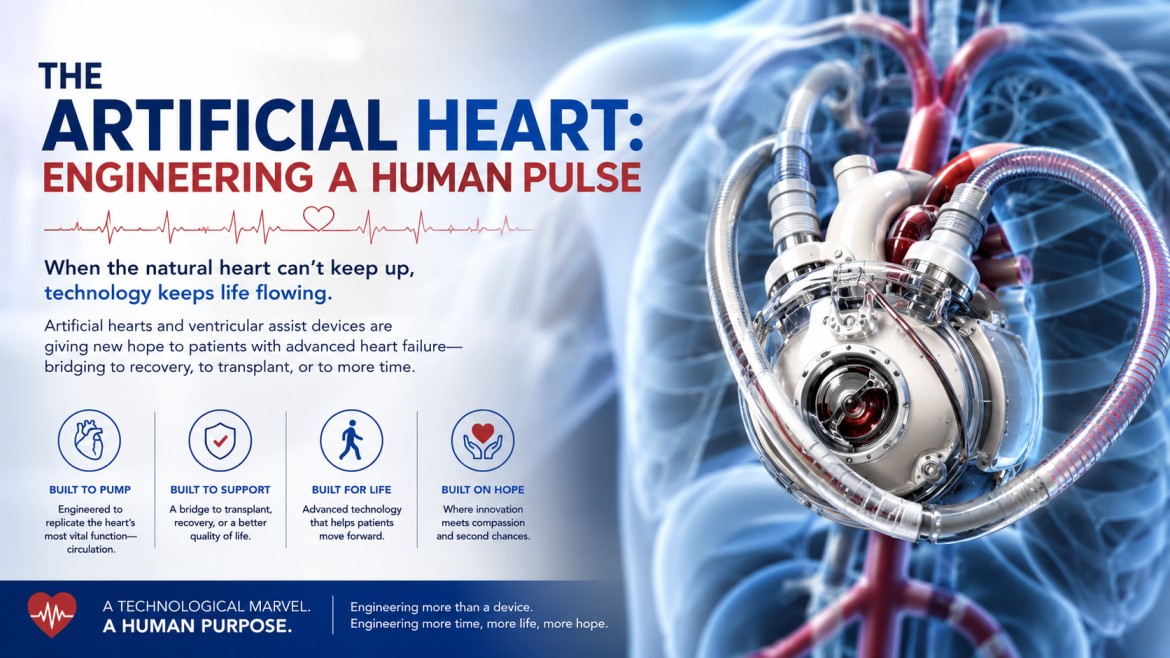
Artificial heart systems contain five major components: mechanical pumps, valves and tubing for blood flow, power supplies, electronic control units, and monitoring systems.
These devices create continuous or pulsatile blood flow to ensure the body continues receiving oxygen and nutrients when the natural heart can no longer pump effectively.
Artificial hearts may be used temporarily while patients wait for a heart transplant, or long term in patients who are not eligible for transplantation.
More Than Just a Pump
An artificial heart is a system of mechanical pumps, but reproducing the function of the natural heart is extremely complex.
The human heart constantly adjusts blood flow according to activity, stress, oxygen demand, and body position. Artificial systems must carefully balance pressure, circulation, and flow while minimizing blood cell damage and reducing the risk of clot formation.
Even small mechanical problems can become serious medical complications. Designing a device that functions continuously inside the body while remaining in direct contact with blood remains one of the greatest challenges in biomedical engineering.
How Modern Systems Have Evolved
Modern artificial heart technology has advanced significantly through improvements in mechanical pump design and engineering. Developments now include compact rotary blood pumps, magnetic suspension systems, improved biocompatible materials, portable batteries, wireless monitoring, and sophisticated flow-control algorithms.
Some modern ventricular assist devices are small enough to fit the patient’s chest cavity, allowing greater mobility and improved quality of life. These systems are also quieter, more energy efficient, and longer lasting than earlier designs.
Advances in artificial heart technology have greatly improved survival rates and expanded long-term treatment options for patients with severe heart disease.
Where Challenges Remain
Despite major advances, artificial hearts still face important medical and engineering challenges.
Patients may remain at risk for:
- Blood clots
- Infection
- Bleeding complications
- Mechanical failure
- Device-related stroke
Long-term anticoagulation therapy is often necessary to reduce clot formation, which introduces additional risks.
Power supply limitations, surgical complexity, and the need for continuous monitoring also remain important considerations.
Even with advanced technology, artificial hearts do not fully replicate the adaptability and biological complexity of a natural human heart.
Why It Matters
Heart failure affects millions of people worldwide and remains a major cause of death. Patients with advanced heart disease now have access to artificial heart systems that can improve circulation, extend survival, and in some cases serve as a bridge to transplant or recovery.
Beyond prolonging life, these systems may also allow patients to return to daily activities, spend time with family, and regain a degree of independence during severe illness.
The artificial heart represents not only an achievement in engineering, but also an effort to preserve human life when the body’s most vital organ can no longer function effectively.
The Human Side of Mechanical Circulation
Adjusting to life with an artificial heart or ventricular assist device can be both physically and emotionally challenging. At first, relying on a machine to support life may feel intimidating. Over time, however, patients and families often begin to associate the rhythmic sound of the device with survival, recovery, and more time together.
Behind every artificial heart is not only advanced medical technology,
but also a person’s determination to continue living despite severe illness.
Closing Thought
The development of the artificial heart has transformed what was once considered impossible into one of modern medicine’s most advanced technologies. As engineering, surgery, and critical care have evolved, artificial heart systems have progressed from experimental pumps to sophisticated mechanical circulatory devices capable of sustaining blood flow.
The significance of the artificial heart is twofold. First, it replaces the pumping function of the natural heart when it can no longer maintain circulation. Second, it helps sustain life while supporting recovery and ongoing treatment.