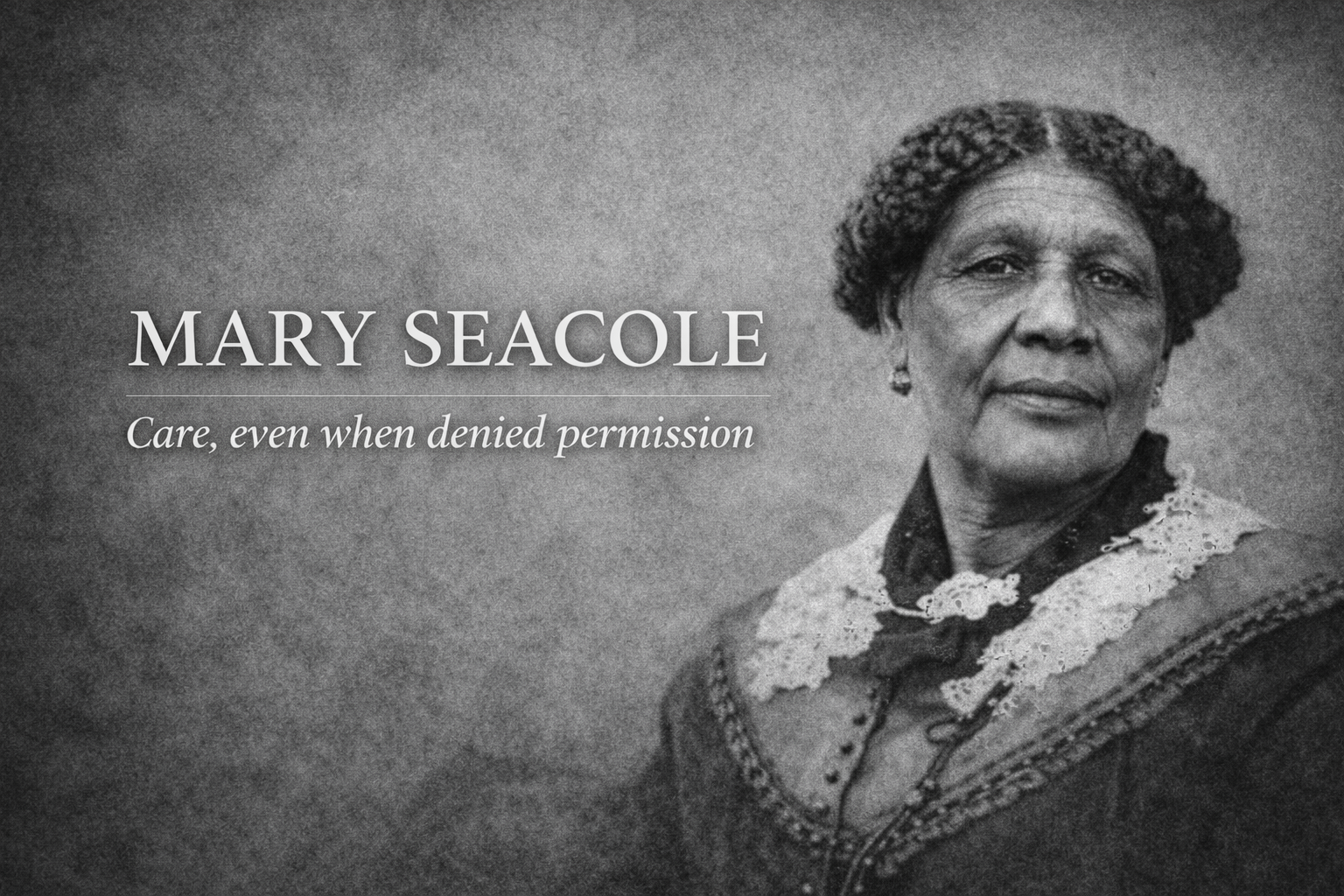
They told her no. Not once. Not twice. Every time she asked to help the soldiers in the Crimean War, she was turned away. Not because she was unskilled. Not because she lacked courage. But because of the color of her skin.
By 1853, hospitals were overflowing with the wounded and sick, places meant to heal that often left soldiers to suffer. Mary Seacole saw the fear, the pain, and the neglect, and she knew she could not stand aside. She was a nurse. A healer. A woman of extraordinary skill. Yet every door she knocked on was closed.
Rejected at Every Door
Mary Seacole applied to serve as a nurse with the British Army. When she was refused, she applied again, and again. Each time, the answer was the same. Not because she lacked experience. Not because she lacked courage. But because she was a Black woman in a system that could not imagine her in a position of authority or trust. Most people would have stopped there. Mary Seacole did not.
She Went Anyway
Using her own savings, Mary Seacole traveled to Crimea on her own. No official support. No protection. No guarantee she would survive. Near the battlefield, she created what became known as the “British Hotel.” It was not a hotel in the usual sense. It was a place where wounded soldiers could receive food, medicine, and care. She treated injuries, managed infections, and brought comfort to men who had been forgotten. She didn’t wait to be invited. She made her own space to serve.
Care Under Fire
Mary Seacole often went onto the battlefield while fighting still raged around her. She cleaned and dressed wounds, treated infections, offered water and warm drinks, and comforted soldiers too weak or scared to speak. She carried her medicines and supplies, moving from one injured soldier to the next.
Soldiers called her “Mother Seacole” for the care and hope she brought. She was not following orders. She was following need, and she did it all at great personal risk.
Recognition Came Late
Mary Seacole returned home with little money and even less recognition. For years, her work was overlooked.
But her courage, compassion, and determination could not be forgotten. Today, she is remembered not just as a nurse, but as a woman who refused to let prejudice or circumstance define her. She showed that care knows no boundaries and that one person’s determination can change countless lives.
Mary Seacole’s legacy reminds us that true heroism is measured not by awards, but by the lives we touch and the hope we give.