Polio Epidemics of the 1950s
In the early 1950s, hospitals faced a problem they could not fix with medicine alone.
Polio epidemics overwhelmed wards across Europe and North America, leaving many patients with paralysis of the muscles needed to breathe. Mechanical ventilators existed, but their numbers were limited, and mortality remained high.
What emerged during this crisis would later shape modern intensive care.
Continuous care born from necessity
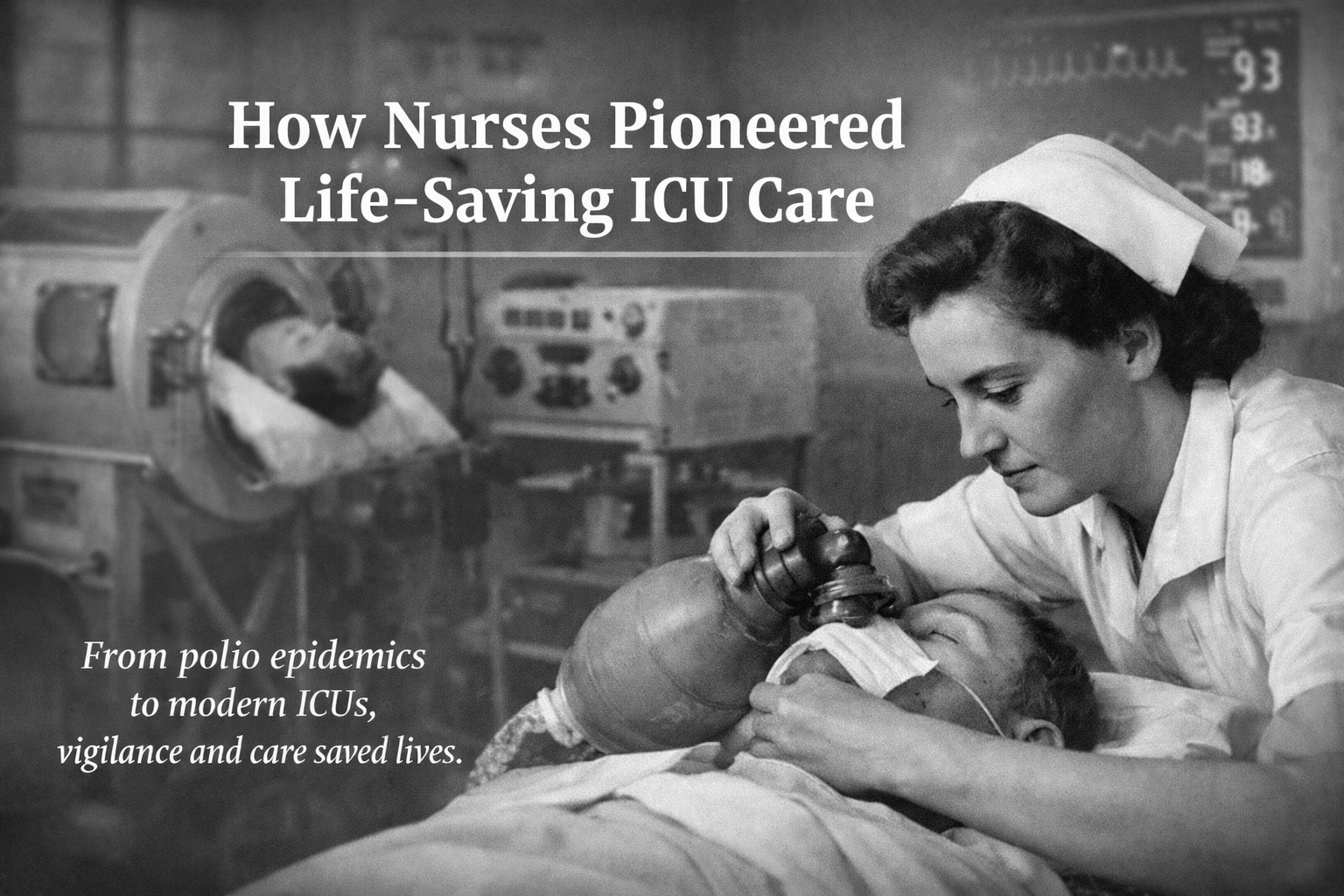
To manage the sickest patients, hospitals began placing those with respiratory failure together in dedicated areas where they could be observed continuously. With ventilators in short supply, breathing was often supported through manual ventilation, delivered using hand-operated devices.
This required nurses to remain at the bedside at all times, closely watching breathing, skin color, pulse, and level of consciousness. Ventilation was adjusted through careful clinical observation rather than machines. Care was constant, coordinated, and highly skilled.
A shift in how critical illness was treated
This approach was different from earlier hospital care, where patients were checked only from time to time. During the polio epidemics, survival depended on constant watching and quick response to small changes.
These units were not yet called intensive care units, but they introduced ideas that still define intensive care today:
- Critically ill patients cared for in one place
- Staff assigned to watch patients continuously
- Ongoing support for breathing
- Team-based care for life-threatening illness
- Lasting influence on modern medicine
Mortality fell significantly where this model was applied. In the years that followed, hospitals began formalizing these practices. Mechanical ventilators, monitoring equipment, and specialized training were developed to support the same model of care first used during the polio crisis.
These developments led to the establishment of what would later be known as intensive care units.
Why this moment matters
Modern intensive care grew out of a crisis that demanded constant human presence and careful judgment. The systems we rely on today were shaped by people who stayed when leaving was easier.
Remembering this moment reminds us to value the unseen work behind modern medicine and to be grateful for the nurses whose vigilance turned care into survival.