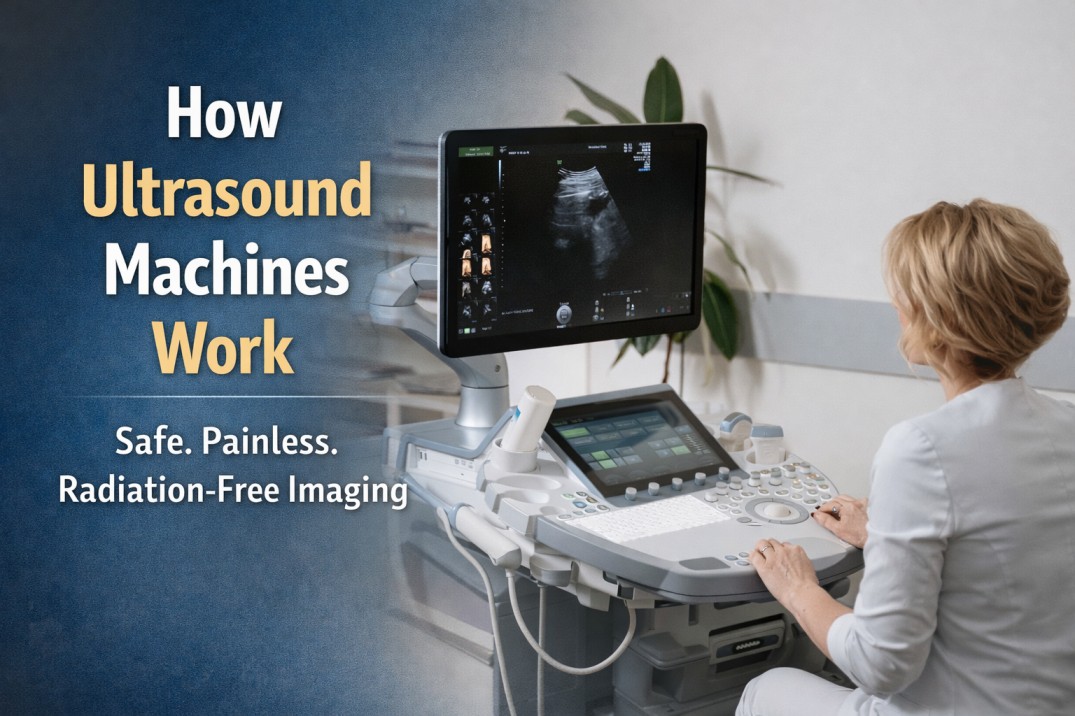
Ultrasound machines may look complex, but the idea behind how they work is actually very simple. They use sound waves to create images of what is happening inside the body, without using radiation.
Ultrasound is commonly used in pregnancy, heart exams, and checking organs like the liver, kidneys, and bladder. Because it is safe and painless, it is one of the most trusted imaging tools in healthcare today.
What Is an Ultrasound?
An ultrasound is a medical imaging test that uses high-frequency sound waves. These sound waves are too high-pitched for humans to hear, but they can travel through the body and bounce off internal structures.
The machine listens to the sound waves that come back and turns them into images on a screen. This allows healthcare providers to see organs, tissues, and even blood flow in real time.
The Main Parts of an Ultrasound Machine
An ultrasound machine has three main parts that work together.
The probe, also called a transducer, is the handheld device placed on the patient’s skin. It sends out sound waves and receives the echoes that bounce back.
The gel is applied to the skin before the probe is used. This gel removes air between the probe and the skin, allowing sound waves to travel clearly into the body.
The computer inside the machine processes the returning sound waves and converts them into images that appear on the monitor.
How Sound Waves Create an Image
When the probe sends sound waves into the body, they travel until they hit something, such as an organ, muscle, or bone. These structures reflect the sound waves back to the probe.
Different tissues reflect sound waves differently. Fluid-filled areas appear dark on the screen, while solid structures appear lighter. Bones reflect most of the sound and show up as very bright areas.
The machine measures how long it takes for the sound waves to return and how strong they are. Using this information, it creates a detailed image of the inside of the body.
Why Gel Is Important
Without gel, sound waves would not travel properly because air blocks sound. The gel creates a smooth path for the sound waves to move from the probe into the body.
This is why ultrasound exams can feel cold at first, but the gel is essential for getting clear and accurate images.
Does Ultrasound Use Radiation?
No, ultrasound does not use radiation. Unlike X-rays or CT scans, ultrasound relies only on sound waves.
This is why it is safe for pregnant patients and can be repeated multiple times without harming the body.
Common Uses of Ultrasound
Ultrasound is used in many areas of healthcare. It is commonly used to monitor pregnancy and check fetal development. It is also used to examine the heart, a process called echocardiography.
Doctors also use ultrasound to look at abdominal organs, guide procedures like biopsies, and assess blood flow through vessels using Doppler ultrasound.
Why Ultrasound Is Important in Healthcare
Ultrasound provides real-time images, meaning healthcare providers can see movement, such as a beating heart or blood flowing through vessels.
It is non-invasive, relatively affordable, and widely available, making it an essential diagnostic tool in hospitals and clinics.