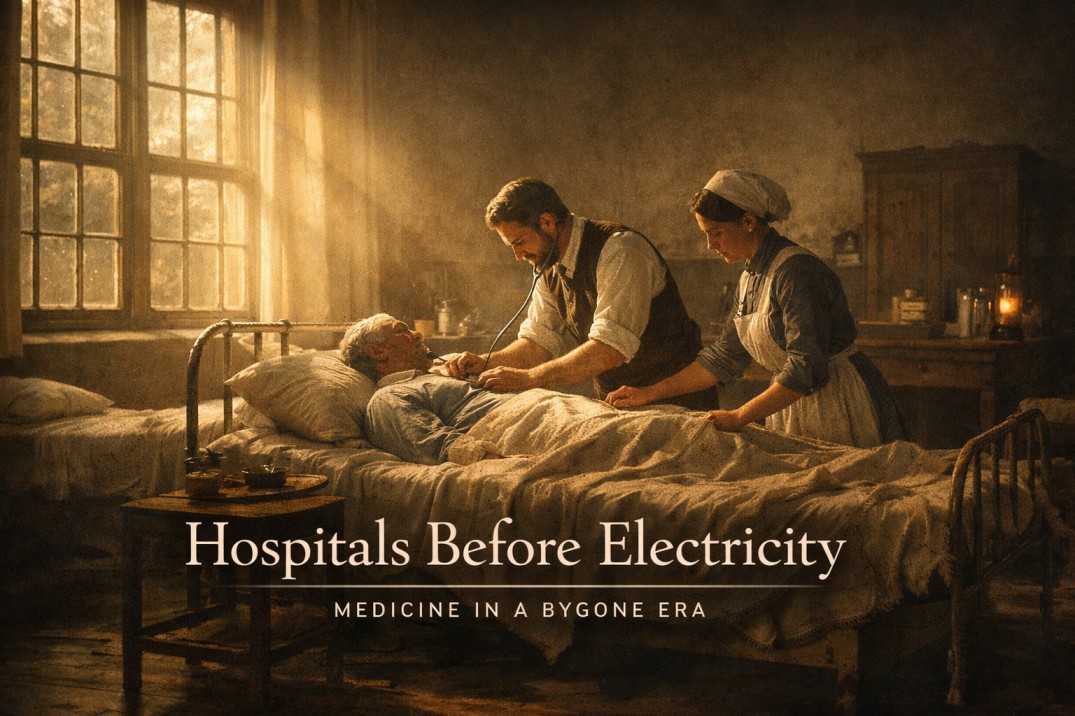
Before electricity transformed healthcare, hospitals operated under conditions that would feel unimaginable today. Doctors and nurses relied on daylight, basic tools, and hands-on skills to care for patients. Despite the limitations, early healthcare workers developed methods that laid the groundwork for modern medicine.
Understanding how hospitals functioned before electricity helps us appreciate today’s technology and the resilience of early medical professionals.
Lighting Came From the Sun and Flames
Before electric lights, hospitals depended on sunlight during the day and candles, oil lamps, or gas lamps at night. Large windows were essential, and procedures were often scheduled when daylight was strongest.
Poor lighting made diagnosis and surgery more difficult. Shadows, smoke, and flickering light increased the risk of mistakes, especially during emergency treatments.
Temperature Control Was a Challenge
Hospitals had no air conditioning or modern heating systems. Rooms were cold in winter and hot in summer. Fires, coal stoves, and fireplaces were used for warmth, but temperatures were inconsistent.
Patients were given extra blankets for comfort, and ventilation relied on open windows, even during harsh weather.
Medical Tools Were Simple and Manual
Without electric-powered equipment, doctors relied on basic instruments such as scalpels, forceps, and stethoscopes. Blood pressure machines, heart monitors, and infusion pumps did not exist.
Doctors depended heavily on physical examination, observation, and patient history to make decisions. Skill and experience mattered more than machines.
Surgery Was Extremely Risky
Surgeries were performed without modern anesthesia, advanced sterilization, or electric suction devices. Speed was critical, as longer procedures increased pain, blood loss, and infection risk.
Operations were often done in daylight near windows. Many patients avoided surgery unless it was absolutely necessary.
Infection Control Was Limited
Before electricity and modern science, infection control was poorly understood. Sterilization methods were basic, and hand hygiene was inconsistent.
Diseases spread easily in crowded wards, and hospital-acquired infections were common. This made hospital stays dangerous for many patients.
Nurses Provided Constant Hands-On Care
Nurses played a vital role in patient care. They monitored patients closely, cleaned wounds, changed linens, prepared meals, and offered emotional support.
Without monitors or alarms, nurses relied on observation and experience to notice changes in a patient’s condition. Their presence often made the difference between recovery and decline.
How Doctors Diagnosed Illness
Doctors diagnosed patients using sight, touch, sound, and smell. They listened to breathing, felt pulses, examined skin color, and observed behavior.
Laboratory tests and imaging did not exist, so accurate diagnosis depended on careful examination and medical judgment.
Why This Era Still Matters
Hospitals before electricity were challenging and dangerous places, but they shaped the foundations of modern healthcare. Many practices developed during this time led to today’s standards in hygiene, patient monitoring, and clinical care.
Modern hospitals, filled with technology and reliable power, are a result of lessons learned through decades of trial, error, and dedication.