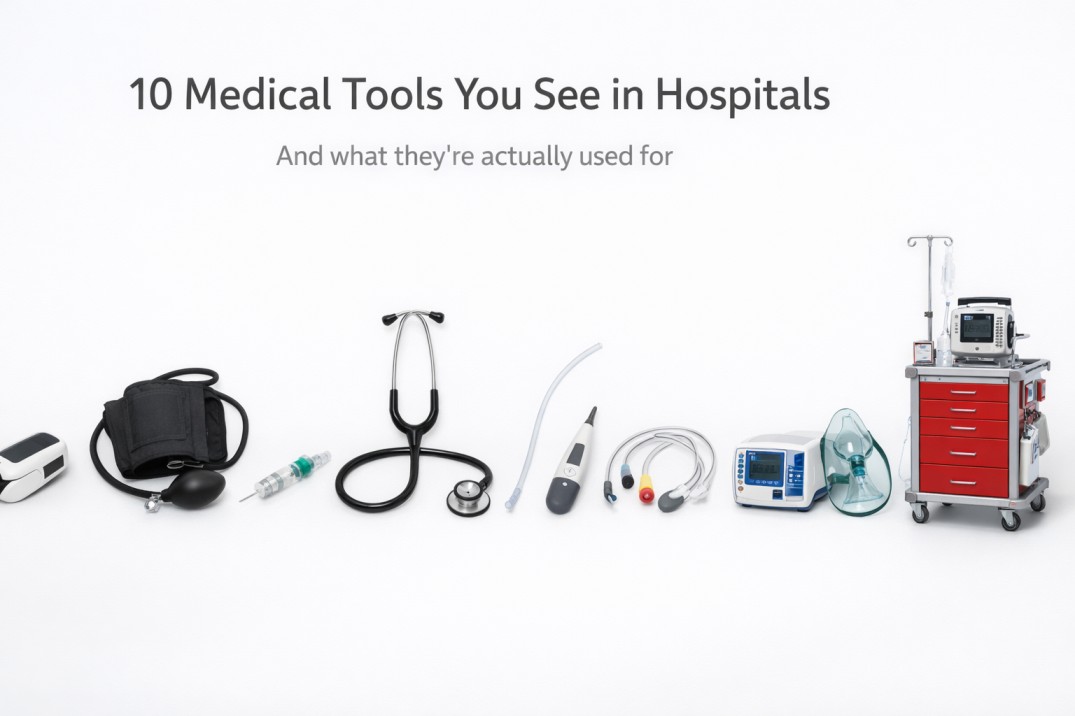
Hospitals are full of medical tools that patients see every day but rarely understand. Some look intimidating, others seem simple, yet each one plays an important role in patient care.
Here are common hospital tools you have probably seen before and what they are actually used for.
1. Pulse Oximeter
This small clip placed on the finger measures oxygen levels in the blood and heart rate. It helps healthcare providers quickly check if a patient is getting enough oxygen.
2. Blood Pressure Cuff
Often wrapped around the arm, this tool measures how strongly blood pushes against artery walls. It helps detect conditions like hypertension or shock.
3. IV Cannula
The small tube inserted into a vein allows fluids, medications, or blood to be delivered directly into the bloodstream. It is commonly used for hydration and emergency treatment.
4. Stethoscope
Used by doctors and nurses to listen to heart sounds, lung sounds, and bowel activity. It helps detect abnormal breathing, heart murmurs, or blocked airways.
5. Suction Catheter
This tool removes mucus, saliva, blood, or fluids from the airway. It helps patients breathe better, especially after surgery or during emergencies.
6. Thermometer Probe
More than just a basic thermometer, hospital probes measure core body temperature accurately, helping detect infections or dangerous temperature changes.
7. ECG Electrodes
Small sticky pads attached to the chest monitor the electrical activity of the heart. They help detect irregular heart rhythms or signs of heart problems.
8. Infusion Pump
This machine controls how fast fluids or medications are delivered through an IV. It ensures precise dosing, especially for critical medications.
9. Oxygen Mask or Nasal Cannula
These devices deliver oxygen to patients who have difficulty breathing. They are commonly used for respiratory conditions or during recovery.
10. Crash Cart
Often seen parked in hallways, the crash cart contains emergency medications, defibrillators, and tools used during life-threatening situations like cardiac arrest.
Why These Tools Matter
Each medical tool plays a specific role in diagnosis, monitoring, or treatment. While they may seem routine, they help healthcare professionals make quick and accurate decisions that save lives.