When working at Nihon Kohden in the early 1970s, Takuo Aoyagi was attempting to create a more precise way of determining cardiac output, but he found that the arterial pulse of blood caused continuous movement of his readings of light measurement. The majority of people in the same situation would have interpreted this as a source of interference.
However, Aoyagi examined the signal in greater detail, realising that he could use the differences in red and infrared light, as well as how they were affected by each heartbeat, as an indicator of a patient's oxygen saturation level without the need to draw blood from the patient.
Rather than referring to the pulse as a source of noise, Aoyagi was able to successfully refer to it as his source of signal and, therefore, his insight created the basis of the pulse oximeter.
How It Works
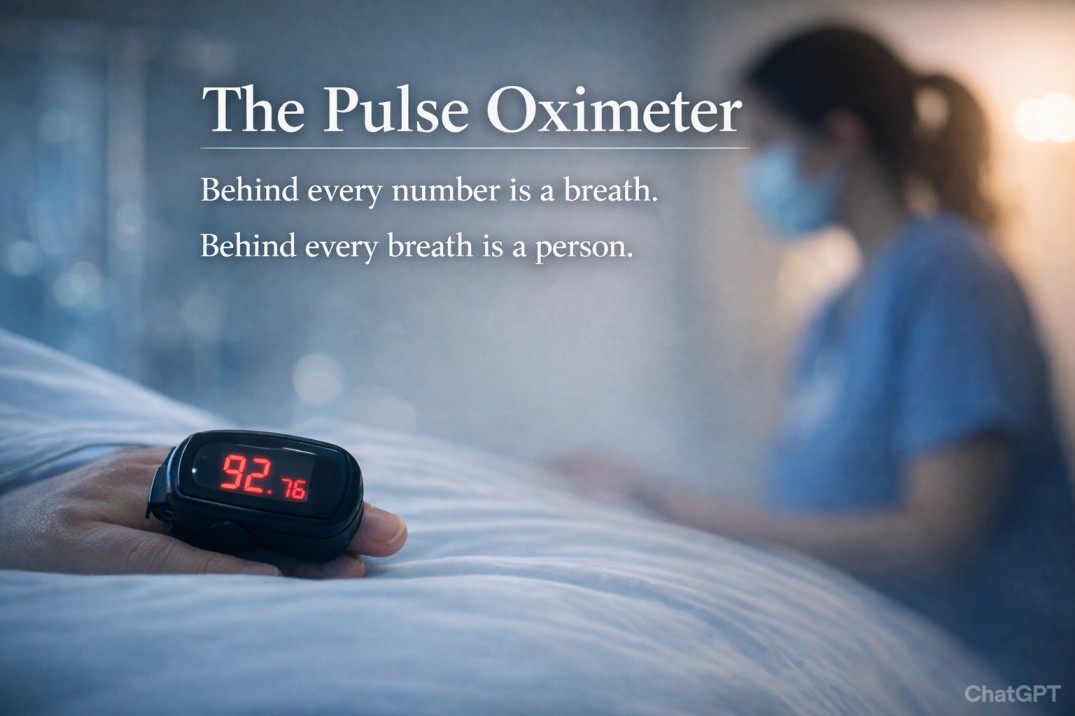
A pulse oximeter clips onto a finger and emits red and infrared light through the tissue. Oxygenated and deoxygenated hemoglobin absorb light differently at these wavelengths.
By measuring the changing absorption during each pulse, the device calculates the percentage of hemoglobin saturated with oxygen, displayed as SpO₂.
Before this development, measuring oxygen levels required arterial blood sampling and laboratory analysis. It was accurate but invasive and intermittent.
Pulse oximetry allowed continuous, real-time, non-invasive monitoring.
Clinical Importance
Pulse oximeters became essential in operating rooms, intensive care units, and emergency settings. They improved patient safety by enabling early detection of hypoxia during anesthesia, respiratory failure, and critical illness.
In 2020, during the COVID-19 pandemic, pulse oximeters became widely used outside hospitals. The phenomenon of “silent hypoxia,” where patients appeared stable despite dangerously low oxygen levels, highlighted the importance of objective monitoring.
The device provided early warning signs that clinical deterioration was occurring, even when symptoms were not obvious.
A Lesson in Innovation
The pulse oximeter was developed over years, not created out of an exciting event. Takuo Aoyagi decided to question what was commonly considered noise and found something useful.
Today, pulse oximetry is an expected part of medical practice throughout the world. It provides continual support to clinicians, peace to families, and protection to patients every moment of the day.
Its history is a reminder of how progress is not always acknowledged with a cheer. Sometimes, it takes patience, interest, and the ability to look a second time before you see the value.
There is something worth appreciating in that.