While medications are an important part of recovery, studies show that the hospital environment can also influence patient outcomes.
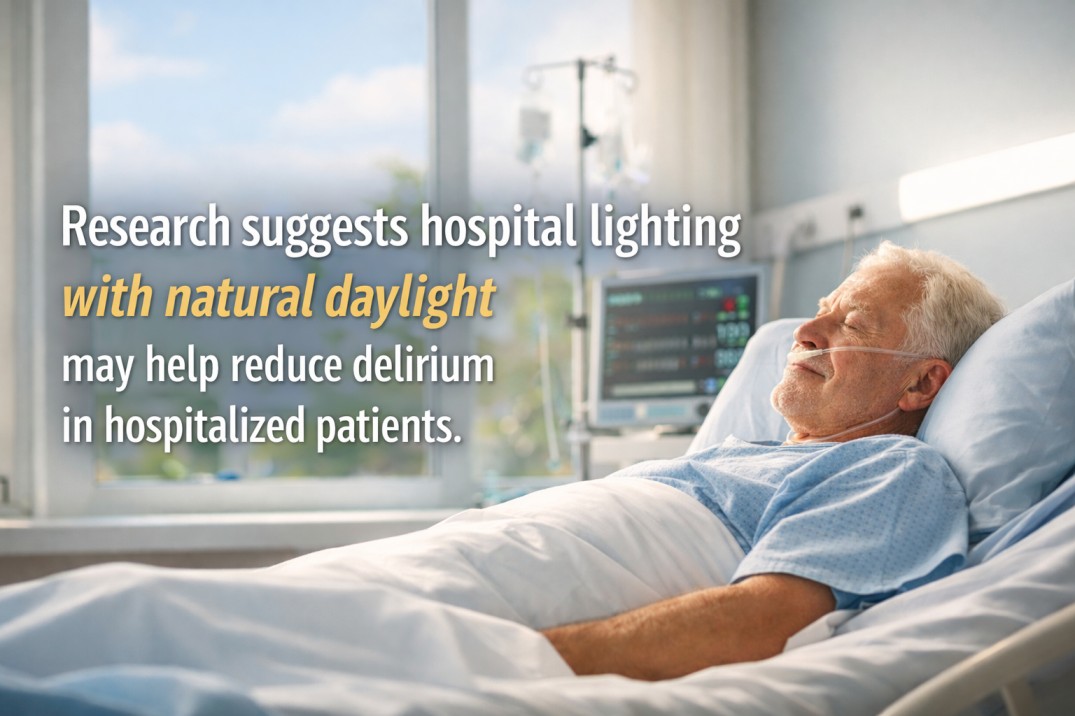
A 2025 study published in the Journal of Sleep Research examined how different types of hospital lighting, both natural and artificial, affect sleep quality and the body’s Circadian rhythm. The study suggests that better lighting patterns may help reduce complications such as Delirium, a condition that causes confusion and disorientation in hospitalized patients.
This article explores current research on hospital lighting and why it may play a role in patient recovery.
Why Light Matters to the Human Body
A human's biology is very affected by natural light. For example, bright daylight will help a human stay awake and also help create a Circadian rhythm inside a human's body. Conversely, the darkness of night will tell a human's body to make melatonin, which is used to prepare for sleep.
Typically, hospitals will provide light at night, even just moderate amounts of light. This moderate light can cause the body to reduce melatonin production and subsequently provide poor sleep for the patient.
When a patient does not have sleep, it will decrease the healing process, increase a person's stress level and increase the probability of a patient developing complications like Delirium.
Evidence From Hospital Studies
One ICU study compared patients in rooms with windows to those in rooms without windows. Patients who received natural sunlight had lower rates of Delirium. The rate was 21.7 percent in rooms with sunlight.
Other studies found that repeated exposure to bright daylight after surgery may help the body maintain a normal Circadian rhythm. These patients also had fewer cases of delirium during recovery.
Another study looked at light levels in patient rooms after surgery. Patients in brighter rooms reported lower stress. They also used less pain medication than those in dimly lit rooms.
These findings suggest that hospital lighting may influence patient comfort, sleep, and recovery.
The Connection Between Light, Sleep, and Delirium
Delirium occurs frequently among hospitalized patients and can cause significant complications. It is most common in older adults, particularly in intensive care units.
Delirium can occur in over50 percent of critically ill patients. It is also associated with longer hospital stays and higher mortality rates.
Disturbances in sleep and the body’s Circadian rhythm are major contributors to delirium. Because of this, researchers are studying ways to reduce delirium through environmental factors.
Lighting that follows natural day and night cycles may help restore circadian rhythms and support more restful sleep for hospitalized patients.
Designing Hospitals That Support Healing
These findings have led to growing interest in “human-centric lighting” in healthcare design. Some hospitals are experimenting with systems that:
- Increase bright light exposure during daytime hours
- Reduce blue-spectrum light during the night
- Simulate natural sunrise and sunset cycles in patient rooms
The goal is to create hospital environments that better align with human biology rather than disrupt it.
Why This Matters for Healthcare Professionals
Patient recovery may be influenced not only by treatments but also by the hospital environment.
Lighting may support recovery by helping improve sleep, reduce stress and pain, and lower the risk of Delirium.
While hospital design is not always within the control of clinicians or nurses, being mindful of lighting, such as allowing natural daylight and minimizing unnecessary light at night, may help support patients’ sleep and recovery.