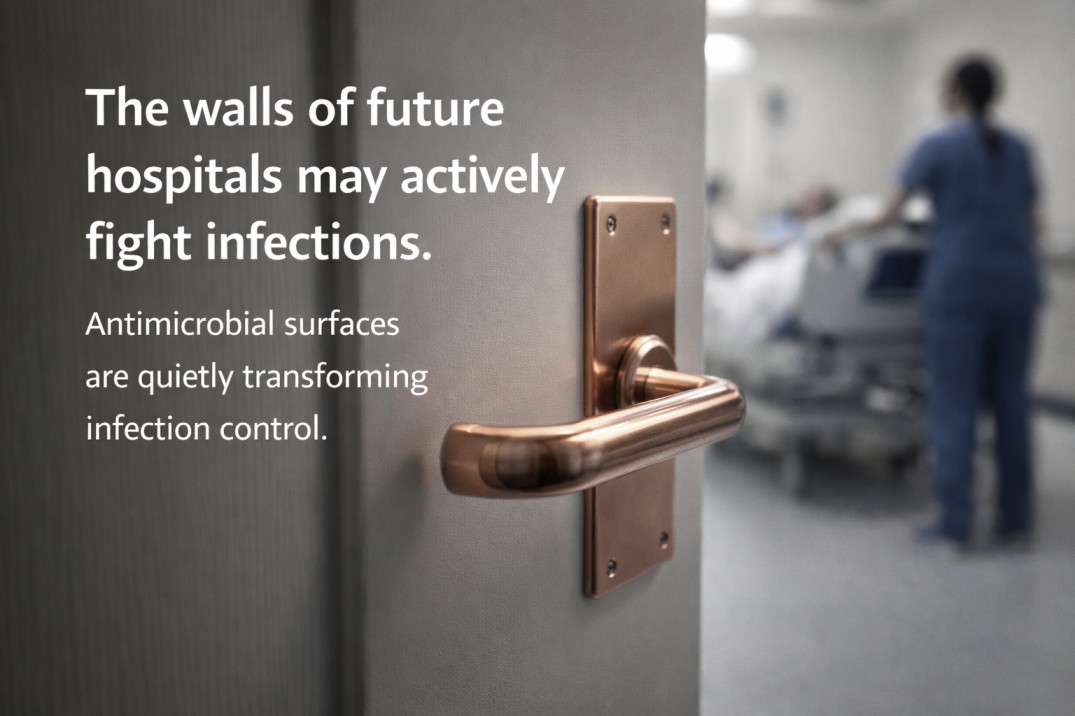
The purpose of hospitals is to help people recover. However, despite a patient's treatment in a hospital, they may still develop an infection.
In addition, germs are often transferred to patients from surfaces regularly cleaned and disinfected, such as bed rails, door knobs, and IV poles, but not adequately cleaned prior to patient use.
The Rise of Antimicrobial Hospital Materials
Healthcare systems are exploring materials designed to slow or stop the growth of bacteria, viruses, and fungi. One of the most promising materials is copper.
Copper has natural antimicrobial properties. When microbes land on a copper surface, the metal releases ions that damage the microbes and stop them from surviving. Studies have shown that copper surfaces can remove most bacteria within a few hours.
This means the surface itself becomes part of infection prevention. It continues working even between routine cleaning.
Where These Surfaces Are Being Used
Some hospitals have started placing copper or other antimicrobial materials in areas that are touched frequently.
Common examples include
- Bed rails
- Door handles
- Overbed tables
- IV stands
- Nurse call buttons
- Light switches
These small points of contact are used constantly by patients, nurses, and clinicians. Because of that, they can play an important role in how infections spread.
Research in the field of Infection Control continues to show that the hospital environment can influence patient safety more than many people realize.
A Quiet Layer of Protection
One of the most helpful aspects of antimicrobial materials is that they work in the background. They do not require new routines or extra steps from healthcare workers.
Hand hygiene and cleaning remain essential, but antimicrobial surfaces add another layer of protection. Even when a surface is touched repeatedly, it can continue reducing the number of microbes present.
It is a simple change in design, but it may help reduce risk over time.
Looking Beyond Copper
Copper is only one example. Scientists and engineers are also studying other materials that can help reduce contamination.
Some new approaches include surfaces that contain silver particles, coatings that become antimicrobial when exposed to light, and plastics designed to resist microbial growth.
These innovations are part of broader research in fields such as Biomedical Engineering and healthcare design.
Why This Matters for Healthcare Workers
For nurses and clinicians, infections are not just statistics. They affect daily care, patient recovery, and the overall pressure on healthcare systems.
When hospitals reduce environmental contamination, it helps protect both patients and the people providing care.
Instead of relying only on constant monitoring and cleaning, hospitals can design spaces that support safety from the beginning.
Designing Safer Hospitals
Even if hospitals of the future look similar from the outside, the materials inside may quietly help fight infections. New surfaces are being designed to reduce microorganisms throughout the day and lower the number of germs on frequently touched areas. In many ways, the next step in creating safer hospitals may come from something very simple, the surfaces we touch every time we enter a patient care space.
Because the mission of healthcare is not only to treat illness. It is also to prevent harm whenever possible. Most hospital safety strategies focus on cleaning, protocols, and training. But what if the surfaces themselves could help fight infections? New materials are being designed to actively reduce microbes throughout the day, quietly and continuously, which could reshape how hospitals protect patients and staff.