Needles can hurt. Finding the right vein should not.
One of the most common & critical procedures in the healthcare industry is establishing a reliable venous access.. How quickly and effectively veins are identified will affect how comfortable, safe & efficiently treated the patient will be (IV therapy, blood draw, emergency procedures.
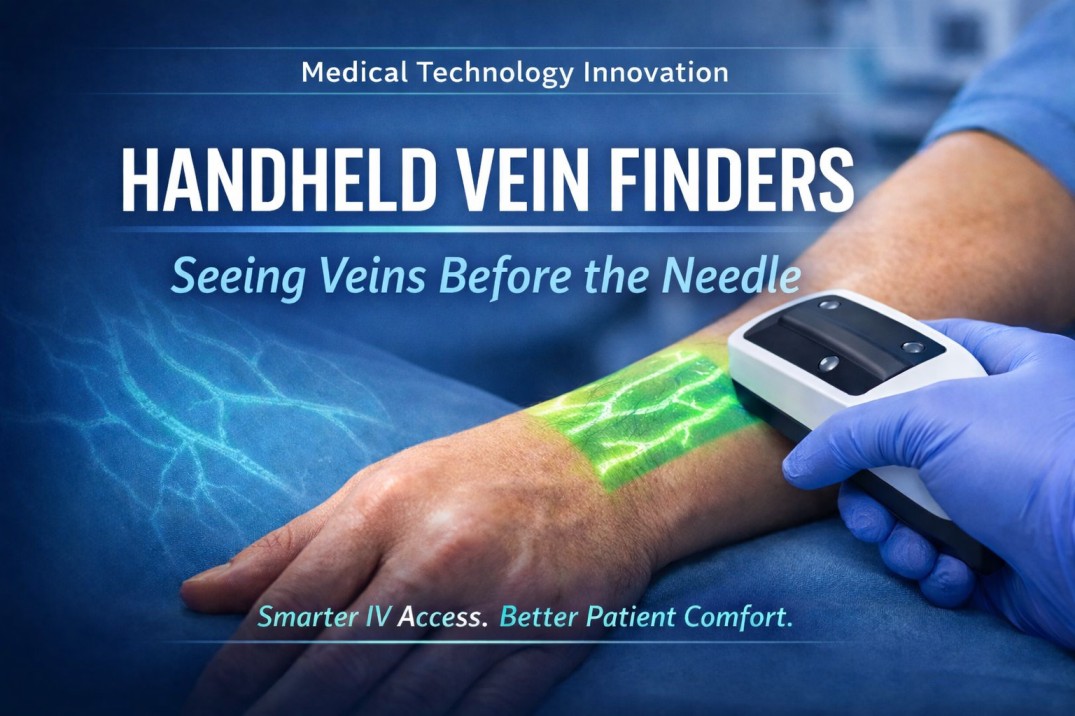
With the development of handheld vein finder devices in the last few years; Clinicians now have a practical way to help them visualize the veins prior to the insertion of the needle, decrease the chance of error, perform smoother procedures and create a better overall patient experience when performing venous access procedures.
Improving Precision in Venous Access
Handheld vein finders use near-infrared light to visualize superficial veins beneath the skin. Hemoglobin in venous blood absorbs this light differently from surrounding tissues, allowing the device to create a real-time map of vein patterns. Some systems project this image directly onto the patient’s skin, while others display it on a digital screen.
This visual guidance can assist healthcare professionals in selecting the most suitable vein before needle insertion, helping to improve first-attempt success rates.
Clinical Relevance Across Patient Populations
For specific patient populations such as elderly or geriatric patients, pediatric patients, obese individuals, dehydrated patients, and those receiving chronic IV therapy (e.g., chemotherapy), venous access can often be difficult. Multiple unsuccessful attempts may lead to increased anxiety, pain, procedural delays, and reduced patient satisfaction.
Handheld vein finder technology provides additional visual information about veins, helping improve successful venous access in these patients and increasing clinical work efficiency.
Supporting Efficiency in High-Demand Settings
In fast-paced environments such as emergency departments, intensive care units, and outpatient infusion centers, time and accuracy are crucial. The use of vein visualization technology may contribute to:
- Faster initiation of intravenous therapy
- Reduced procedural complications
- Improved patient experience
- Greater confidence among newly trained staff
- More streamlined clinical operations
Recognizing Practical Limitations
Despite their advantages, handheld vein finders are supportive tools rather than replacements for clinical expertise. Factors such as deep or fragile veins, patient movement, poor peripheral circulation, or certain skin characteristics may influence device effectiveness. Proper training and clinical judgment remain fundamental to safe practice.
Looking Ahead
Portable diagnostic technologies are becoming an important part of modern healthcare. Handheld vein finders show how simple innovations can improve clinical practice. By helping clinicians visualize veins more clearly, these devices can support more accurate procedures and enhance patient comfort.
Their growing use reflects a broader shift toward efficient, patient-centered care in today’s healthcare settings.