In emergency medicine, time decides survival. Sudden cardiac arrest occurs without warning. The heart stops and blood flow to vital organs is interrupted within seconds.
If no immediate assistance is rendered to restore blood circulation and prevent permanent damage to brain cells, the patient has very little chance of survival. During this critical time period, the defibrillator is a life-saving piece of equipment that assists in restarting the heart and giving the patient a chance at survival.
Understanding Sudden Cardiac Arrest
When a person has sudden cardiac arrest (SCA), their heart has developed an uncoordinated pattern of electrical activity known as chaotic electrical activity. Because of this uncoordinated pattern of electrical activity, their heart can no longer pump blood efficiently. Typically, during SCA, the heart develops dangerous rhythms including ventricular fibrillation (VF) and pulseless ventricular tachycardia (pVT).
When circulation stops, oxygen supply to vital organs is immediately compromised. The brain is especially vulnerable, and irreversible injury can begin within minutes. Early recognition and prompt treatment are therefore essential to improve survival outcomes.
Principle of Defibrillation
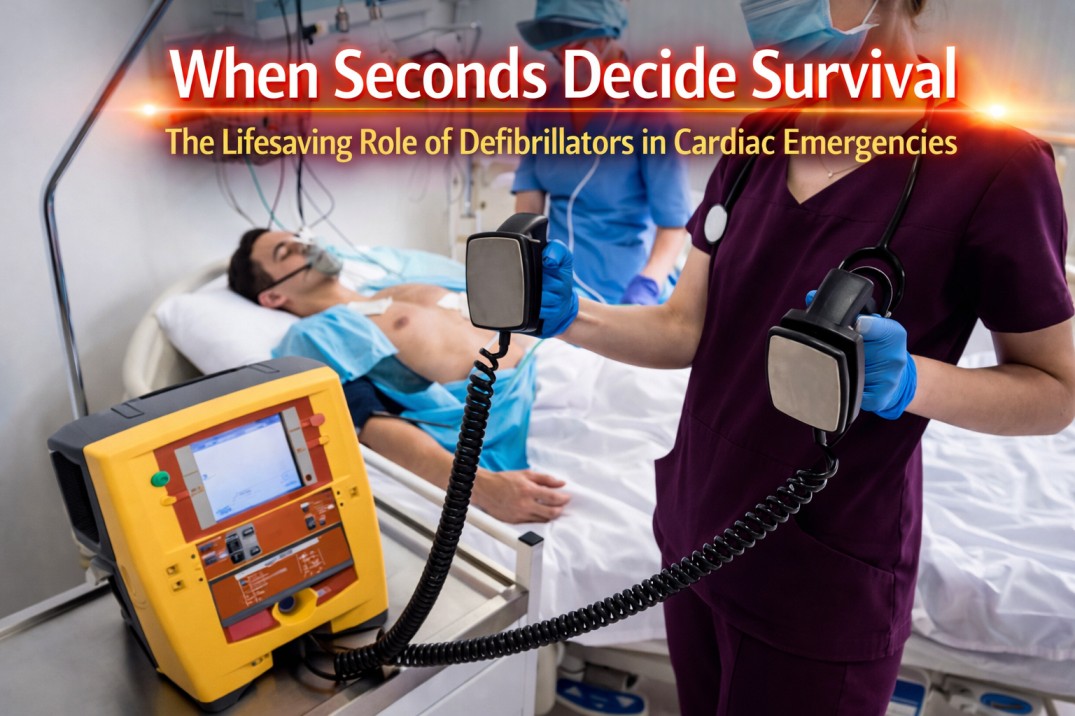
Defibrillation works by delivering a controlled electrical shock to the heart muscle to stop life threatening irregular electrical activity. This brief interruption allows the heart’s natural pacemaker cells to regain control and restore a coordinated rhythm.
When defibrillation is performed early and combined with high quality cardiopulmonary resuscitation, the chances of successful resuscitation improve significantly. Timely intervention not only increases survival rates but also enhances the likelihood of better neurological recovery.
Types of Defibrillators in Clinical Practice
Healthcare professionals may encounter different types of defibrillators depending on the clinical environment:
- Automated External Defibrillators (AEDs): Designed for rapid use in public spaces and clinical areas, AEDs provide voice prompts and automated rhythm analysis, enabling prompt intervention even by minimally trained responders.
- Manual Defibrillators: Commonly used in hospitals, these devices allow clinicians to interpret cardiac rhythms, select appropriate energy levels, and perform synchronized cardioversion or pacing when required.
- Implantable Cardioverter Defibrillators (ICDs): Used in high-risk cardiac patients, these devices continuously monitor heart rhythm and deliver shocks internally when dangerous arrhythmias are detected.
Clinical Responsibilities of Healthcare Workers
Effective defibrillator use requires more than technical familiarity. Healthcare workers must be competent in:
- Rapid recognition of cardiac arrest and shockable rhythms
- Ensuring patient and team safety during shock delivery
- Coordinating defibrillation with uninterrupted chest compressions
- Monitoring post-resuscitation status and preventing complications
- Maintaining equipment readiness through regular checks and drills
Preparedness, teamwork, and clear communication are essential components of successful resuscitation efforts.
Advances in Defibrillator Technology
Modern defibrillators are equipped with advanced features that improve the quality and speed of resuscitation. These include waveform optimization, real time feedback on chest compression performance, integrated patient monitoring, and enhanced portability for rapid deployment.
Such technological developments support informed clinical decision making and improve the efficiency of emergency response in both prehospital environments and hospital care settings.
The Importance of Training and System Readiness
The presence of defibrillators alone does not guarantee better patient outcomes. Consistent training, simulation drills, and strict adherence to resuscitation protocols are essential to maintain clinical competence and confidence.
Institutional preparedness also plays a vital role. Strategic placement of devices, well coordinated rapid response systems, and a culture of readiness can significantly strengthen survival chances during cardiac emergencies.
Conclusion
Defibrillation remains one of the most effective interventions in cardiac arrest management. For healthcare professionals, timely action, clinical judgment, and ongoing skill development are essential to convert technology into survival.
In critical moments, the defibrillator is not just a device. It represents the link between sudden collapse and the chance of recovery. In emergency care, every second matters. Prompt defibrillation can turn those seconds into lifesaving opportunities.