Introduction
There are times in clinical practice when decisions are made almost instantaneously. One common situation is the insertion of a Foley catheter. There is clear justification, such as the need for telemetry, precise urine output measurement, or support for a patient with limited mobility.
At that moment, it feels like the best decision. Safe. Easy to justify. Immediate. Yet, because it is so routine, it may become automatic, with little review. What begins as necessary can quietly continue without question, when it deserves more thoughtful evaluation.
A Tool of Clinical Utility
Foley catheters are one of the most widely used medical devices today and have a number of proven advantages, including their potential to allow accurate measurement of fluid balance, decrease the need for continuous patient transfers, and help provide care to patients who are critically ill or dependent upon others. In addition, Foley catheters can make it easier to streamline processes and provide more organized care in difficult clinical settings. As such, their practical nature has likely led to their frequently reported use.
The Clinical Risks
Even with their usefulness, indwelling urinary catheters have many potential problems, including a high rate of catheter-associated urinary tract infections. The risk increases with each passing day.
In addition, prolonged use of urinary catheters causes discomfort and reduces mobility, which further delays recovery, causes physical deconditioning, and impacts future independence.
The Patient Experience
Although the catheter serves a medical purpose, there is often little recognition of the effect it will have on the patient's quality of life. For many people, the catheter is both uncomfortable and invasive, changing a very private function, while changing their dignity and autonomy.
The presence of the catheter and reduced ability to perform normal daily activities significantly change both the physical comfort and emotional health of people with catheters. This information is not commonly documented or discussed; however, it is an important part of overall patient care.
The Culture of Precaution
In a lot of cases, catheters are inserted into the body for precautionary reasons rather than a medical need. This "just in case" mentality can make sense when you are working in a high-stress environment.
However, prolonged use of catheters when there is no clear reason for doing so can lead to them becoming part of the daily routine. A catheter may be in place longer than necessary, and therefore there becomes an increased risk of avoidable harm over time.
The Importance of Reassessment
Placement of a catheter is only the first step; replacement needs to be regularly evaluated as well, given that the answer to whether the catheter is still needed can change from day to day.
In order to ensure that catheters are being removed in a timely manner, every effort should be made to maintain communication and keep the patient as involved as possible. If there is not frequent reassessment of catheters after placement, the risks associated with this will continually increase.
Balancing Efficiency and Humanity
Foley catheters are an important part of contemporary medicine and have a very clear role when used properly.
However, the use of foley cathers requires balance. The benefits of efficient care should not come at the sacrifice of patients’ dignity. The objective should not be to avoid the use of the device, but rather to use it intentionally whenever required for medical care. As a result, use of a foley catheter will be considered justified and responsive to a patient’s changing medical condition when continued use is appropriate.
Conclusion
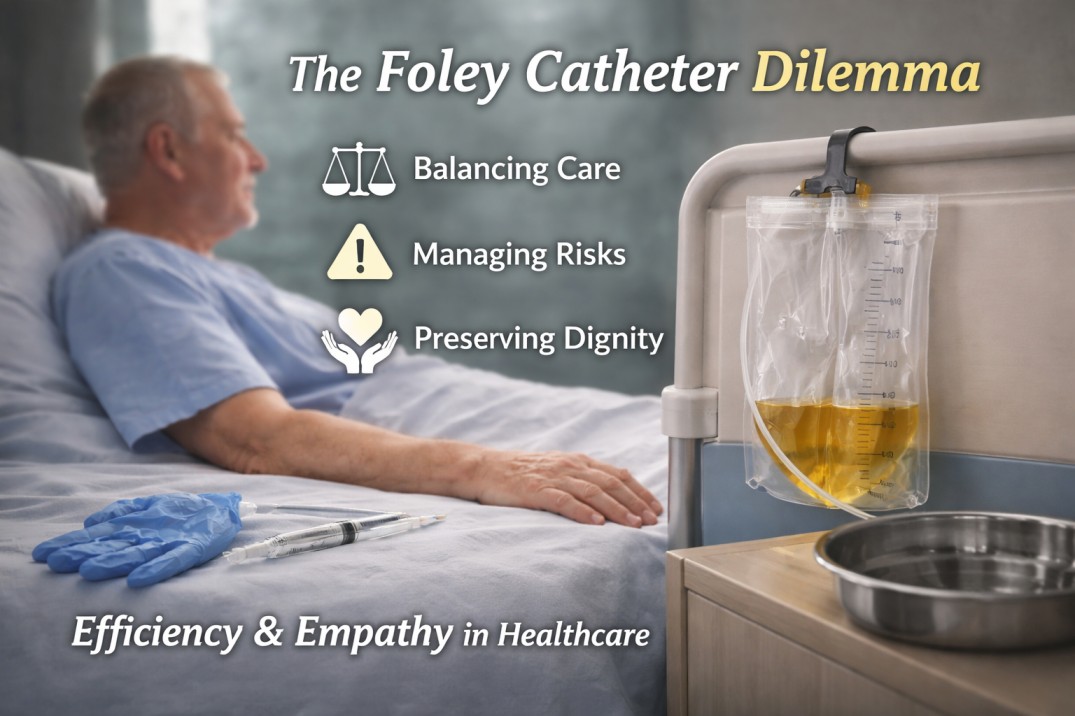
A Foley catheter affects clinical practice as well as the way we make decisions, manage risk, and preserve dignity. What appears simple may have a lasting impact.
To do so creates greater intention in our care. It also reminds us to reconsider our actions in healthcare from a more intentional perspective. Thus, we should be doing something not only as an effective healthcare provider, but as one who embraces human dignity.