Introduction
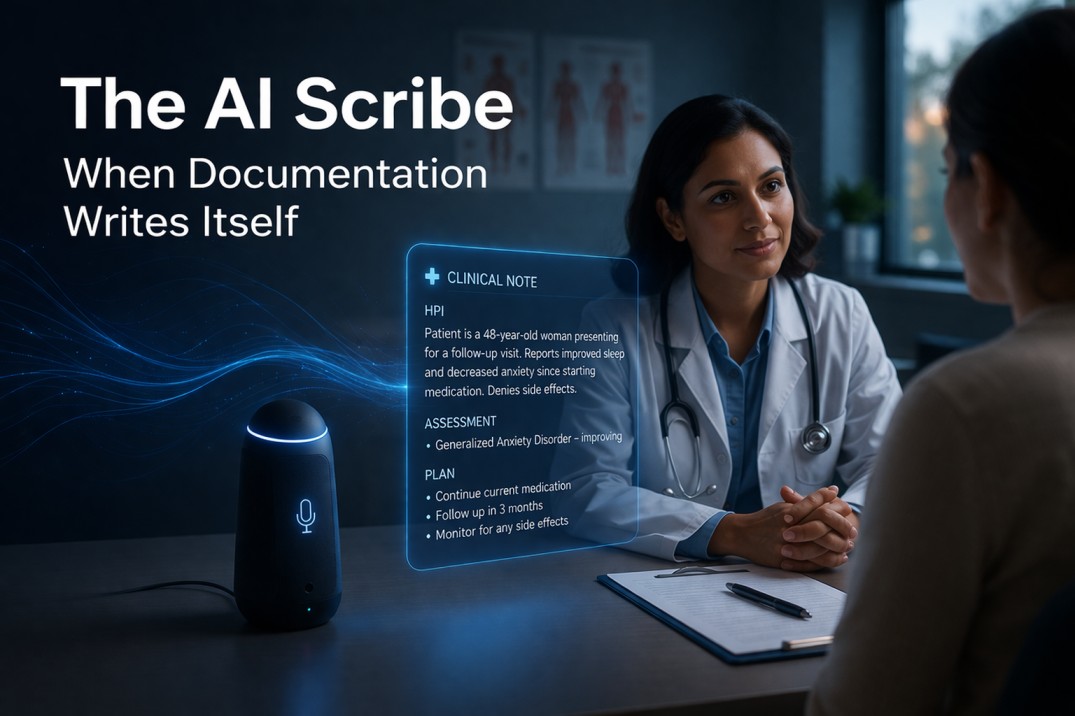
It is already happening. In some clinical settings, documentation is no longer written manually but generated in real time. A device listens, a conversation takes place, and a structured clinical note is produced. The process is fast and seamless. It is no longer theoretical.
Where It Stands Today
AI scribe systems are already being implemented in clinical practice, particularly in the United States. Health systems such as Kaiser Permanente and Mayo Clinic have piloted and expanded their use in outpatient care.
Since 2023, tools developed by Microsoft (Nuance DAX) and Abridge have been integrated into workflows, using ambient listening to generate clinical notes in real time. Clinicians primarily review and sign off rather than document manually.
Adoption is expanding, and the transition from pilot to routine use is already underway.
The Intended Benefit
The goal is to reduce documentation burden and improve workflow efficiency. By minimizing time spent typing, these systems aim to allow more time for patient interaction. Early use suggests reduced after-hours documentation and improved time management. For many clinicians, this represents a meaningful operational improvement.
Accuracy and Reliability
Documentation is not merely transcription; it involves interpretation. AI systems depend on audio input and language processing, which may not always capture nuance or context. Small omissions or misinterpretations can alter meaning. These errors may not be obvious but can persist within the medical record. Accuracy, therefore, extends beyond words to clinical intent.
Bias and Representation
AI systems are trained on existing data, which may contain embedded patterns and biases. The language used in documentation can influence how a patient’s condition is perceived. Without careful oversight, AI-generated notes may unintentionally reproduce these patterns. This has implications for both documentation quality and clinical interpretation.
Impact on Clinical Thinking
Documentation has traditionally been part of the clinical reasoning process. Writing a note requires organizing information and reinforcing decisions. With AI-generated documentation, this process changes. Clinicians may shift from actively constructing notes to reviewing them. This introduces a subtle risk where critical thinking may become less deliberate.
Time and Attention
AI scribes aim to return time to clinicians, but time alone is not sufficient. Attention remains a critical factor. If documentation becomes automated, the question is where that attention is redirected. It may return to the patient, or it may be divided across competing demands. Efficiency does not necessarily ensure clinical presence.
Clinical Responsibility
AI-generated documentation is a support tool, not a replacement for clinical judgment. Each note requires careful verification and contextual understanding. The responsibility for accuracy and interpretation remains with the clinician. The final record must reflect clinical insight, not just generated content.
Conclusion
AI scribes are no longer a future concept; they are being implemented and tested in real healthcare environments. They offer clear advantages in efficiency and workflow. However, documentation is more than a task. It is part of how clinicians think, communicate, and make decisions. As this technology becomes more integrated into practice, its use must remain deliberate and critically evaluated.
When documentation writes itself, clinical judgment must become even more intentional.